The Artist’s Crisis

I have so many photographer friends.  Many are hobbyists, and others are professionals, either part-time or full-time.  Photography used to be my hobby, back when I did it simply because I loved photography.  I think that’s why most photographers DO photography, simply a matter of love.

I think most artists are fragile.  Okay, sure some artists are arrogant jerks (I only say that because I have known a few.) But for the most  part, artists are sweet beautiful people who see their “art” as an extension of themselves.  They/we want other people to love our art because we feel better about ourselves.  I might be wrong on that in some cases, but for the most part, all you have to do to make an artist smile is to tell them you love their art.  They/we bask in the adoration.  “Ahhh I am loved.” 🙂
And if you are a Facebook user, tell me… when you post a photograph you’re really proud of, do you keep checking to see how many “likes” you’ve earned?

More “Likes” = “I must be a better photographer”

Would an artist keep doing their art if they only got criticism?  “Your art sucks.” doesn’t usually serve as a good motivator.   In fact, if several people tell you your art is terrible, you probably will be tempted to throw your camera off a cliff, or maybe jump along with it. (But don’t do that.)

I am a big believer that every artist should, to some extent, resist this yearning to be affirmed, and instead pursue their art for themselves.  Do it because YOU love it.  Excel because YOU love what you are doing.  Challenge yourself because YOU want to create even better art.   Maybe don’t even do your art the way others do it.  Be creative. Be different. Be you. You are the WORLD EXPERT on being you! So be good at it!

I think when we tune into that creative force within us, there is something really cool happening.  Now I don’t want to get all “spiritual” on you (and some of you might not agree with me on this anyway) but I think our creative nature is something given to us by God. I see God as a loving force that is in the business of “creating” and we are created in God’s image, so we also are creative beings.  At least that’s the way I see it.  Regardless of how you see it, I think you’d agree that there is something special and unique about us humans… we seem to be built to create art and music.  I love it when I see someone create beautiful art, expressing that creative force within themselves.

The Curse of “Going Pro”

I am a full time pro photographer.   I have to admit, I wonder sometimes why I did this.  I have been in business for myself for almost 20 years, so I am somewhat comfortable with the unpredictable income varying from month to month.  I LOVE working for myself.  Well, for the most part.  Ok, parts of it I hate.

Being  a pro photographer is not as “glamorous” as some people think it is.  I mean I am not always out doing some amazing photography in the mountains of Colorado or photographing a beautiful model.  I am also the janitor.  Yes that is my hand carrying out the garbage from my studio.  That is a better summary of daily life, just doing what needs to be done because it is my job, not just my hobby.  And then there is the book keeping.  Thank God my wife handles that.  I am grateful for that. I hope she never screws up because I can’t fire her.

I think the hardest thing about doing photography professionally, though, is the fact that as soon as you accept money for your service of photography there is an expectation that you will do a good job.  You are no longer in the business of pleasing yourself.  You have to please someone else.

Pleasing someone else is kind of tricky.  It is subjective. You might create a photograph that you think is absolutely fantastic.  The lighting is just absolutely perfect. Then the client says, they don’t like their smile in that shot.  But don’t they see how beautiful the light is??  Check out that bokeh. Isn’t that perfect??  Nope, the smile is all wrong.  Well darn.

The challenge is very real.  You are placing yourself in the position of creating something that you need someone else to love.   In this mission, you are BOUND TO EVENTUALLY FAIL at some point.  And then the temptation is to run over to that cliff with your camera and jump OR you decide you want to be a plumber.  That’s it.  You’ll become a plumber. They are paid pretty well.  And no one can argue with you when you show them you fixed their stopped drain. It’s working now.  That’s not a subjective thing.  It is either fixed or it isn’t.  Yep, I am going to be a plumber.

Or maybe you just had a bad day and you just blew it.  No excuses.  You just didn’t do a good job and you know it.  Again that is BOUND TO HAPPEN SOMETIME.   You want to minimize this stuff from happening, but it happens.  Most photographers won’t necessarily admit this can happen but it does.  Now you are scrambling to see if you can somehow fix the shots in Lightroom or some Herculean effort in Photoshop.

I guess  am just writing this to say, if you hit an “artist’s crisis” like this, don’t give up.  You are not a failure.  Just try to recover and keep moving forward.   You are not the only person this has happened to.

I personally know of photographers who I think are OUTSTANDING photographers who have faced this crisis.

If you need a hug.  Drop by and I’ll give you a hug.

Whatever you do, don’t give up.

I love you artist types.  Keep making art.

Kevin Gourley


Share

Sometimes Confusing – High Speed Sync on Speedlites

Someone recently asked about using a Speedlite’s High Speed Sync mode to shoot at faster shutter speeds to get sharper images by reducing vibration blur in hand held shots.  If you have ever wondered about this, let’s explore this a bit to discover why this might not have the intended consequences.

Have you ever run into problems where you want to shoot at faster shutter speeds with a flash, like a Canon Speedlite or a Nikon Speedlight but find the higher shutter speeds are not accessible?  You’ll hit a barrier where some shutter speeds are not permitted because the higher shutter speed are so fast that the curtains of the shutter do not even have time to allow the shutter to be fully open.  Thus if the shutter curtains were not fully out of the way, the flash would not evenly illuminate the image.  The fastest shutter speed that can be used where the shutter is fully open is called the ‘flash sync speed’.  Shoot at any shutter speed above that, and the shutter curtains get in the way.

Example 1:  For at least a brief time, the shutter is fully open. In this case, the flash can fire and properly illuminate the subject:

Example 2: At faster shutter speeds, beyond the flash sync speed, the shutter curtains are not fully open, and the flash would not be usable:

SO what that means to you is that you can encounter various problems.

What if you are shooting outdoors on a bright day?  In that case, your photographs shot with a flash are likely comprised of a portion of the light contributed by the ambient (existing) light in the scene and then the flash is adding to the light of the scene.  It is entirely possible that you may need to shoot at shutter speeds that are faster than the camera’s flash sync speed in order to minimize motion blur due to hand held camera vibrations OR to reduce the amount of ambient light exposed on the scene.  In either case, you sometimes really need to shoot at faster shutter speeds.
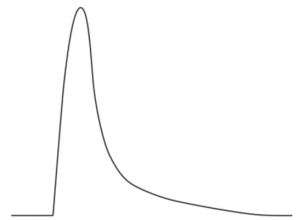
That’s where Canon’s High Speed Sync mode or Nikon’s Auto FP modes come in. They change how the flash works.  Normally the pulse of light from a flash is VERY brief, depending on the power level of the flash.  The lower the power, the faster the pulse. They can be speeds like 1/5,000th,  1/10,000th or even faster in some cases.
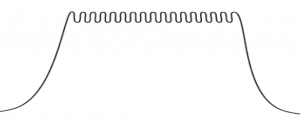
When you turn on the Canon High Speed Sync (HSS) or Nikon Auto FP mode, the flash actually extends the pulse of light and keeps pulsing it so that the light will be on the entire time the shutter is open.

For example, on a Canon 6D which has a flash sync speed of 1/180th second, if you turn on HSS mode on a Speedlite, and set the 6D’s shutter speed to 1/200th second, it actually SLOWS DOWN the light pulse from the Speedlite to extend it’s duration to 1/200th second.  So, ironically, “High Speed Sync” mode really slows down the flash even though you might think the name implies just the opposite.  It still has great value though.  If you are shooting outdoors and need to shoot at 1/500th or 1/1000th, HSS lets you do that.

Now, let’s say you are shooting indoors, like when you are using flashes in a home studio environment, where your flashes are the only appreciable source of light.  If your exposures are not really trying to mix in any ambient light, then you don’t need to shoot at any particularly fast shutter speed and HSS is not really necessary.  All you care about is having the shutter open fully while the flash(es) provide ALL of the light for the exposure. In that case, HSS actually is not helpful, and you actually CAN pick up motion blur in a flash photo if you are not careful.

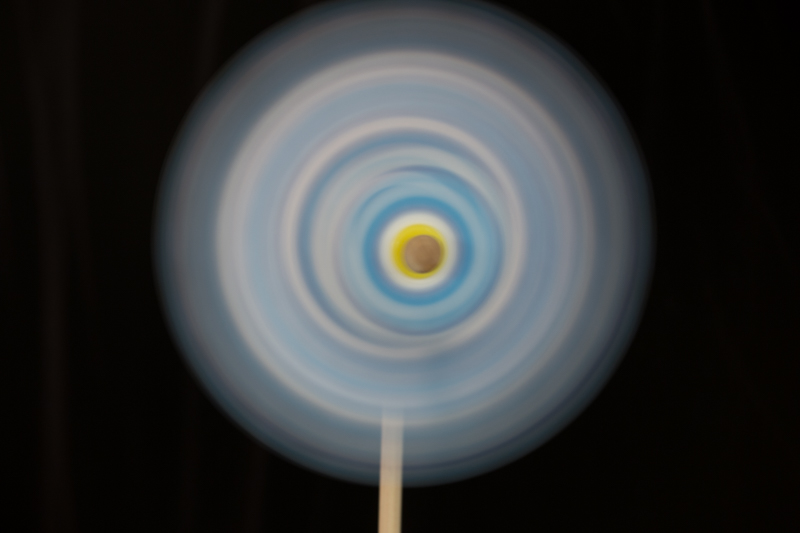
I ran a simple test photographing a pinwheel spinning at a constant speed.  This really illustrates the difference where HSS actually can contribute to motion blur in some cases!

Ambient light, slow shutter speed,  0.4 seconds: 
Speedlite is the primary light, no ambient light: 1/60th second:
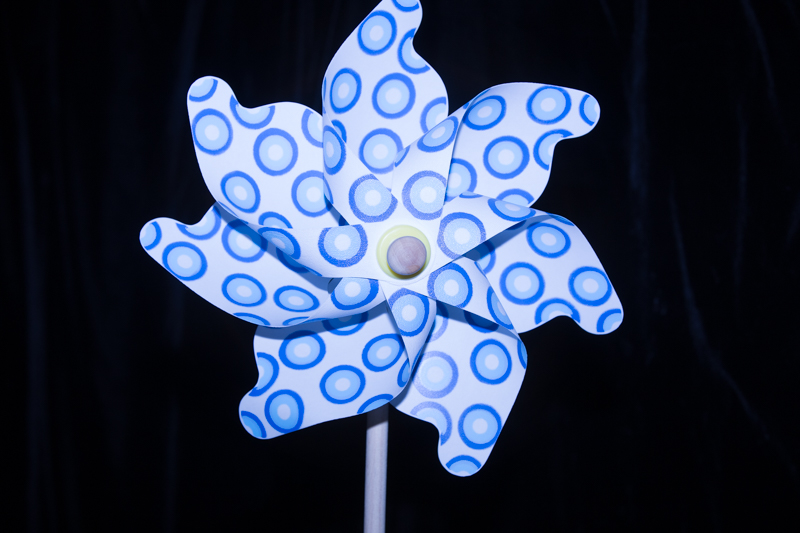
Speedlite is the primary light, no ambient light: 1/180th second:
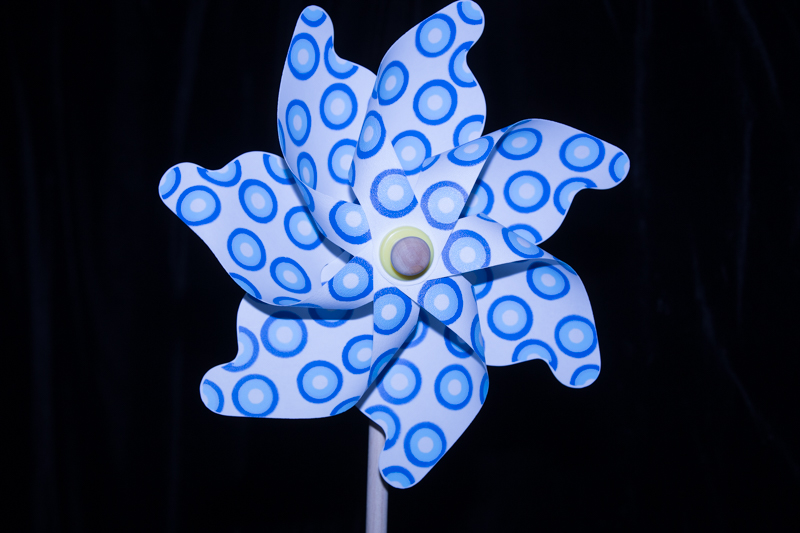
Note that for the two shots above, the image is very sharp, regardless of whether I was shooting at 1/60th or 1/180th. The only light really illuminating the pinwheel was from the flash and that pulse of light was ultra fast, maybe 1/5000th or more.

Now see what happens when I turn on HSS and shift the shutter speed even FASTER to 1/200th:
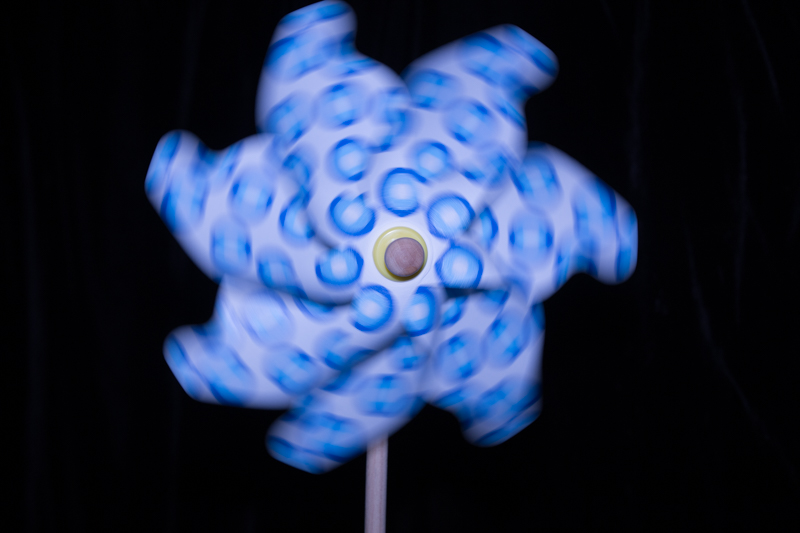
WHAT?  I went to a FASTER shutter speed and now I am picking up MORE motion blur??? YES!  That’s because with HSS, the flash is now SLOWING down the duration of the pulse of light to be on during the entire time the shutter is open.  The result is you are ironically capturing more motion blur by moving to a faster shutter speed.

Ok, let’s try 1/400th second:
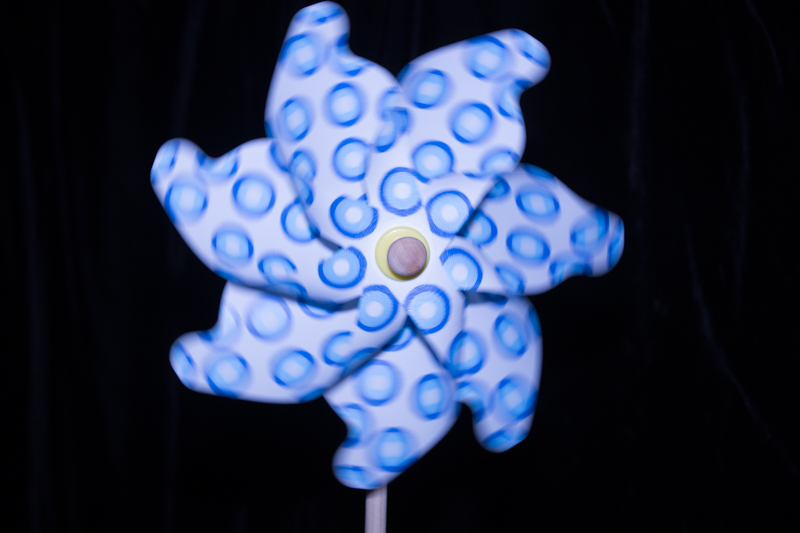
Even at 1/400th, we still are not freezing the pinwheel! Ouch!

Let’s try 1/1000th:
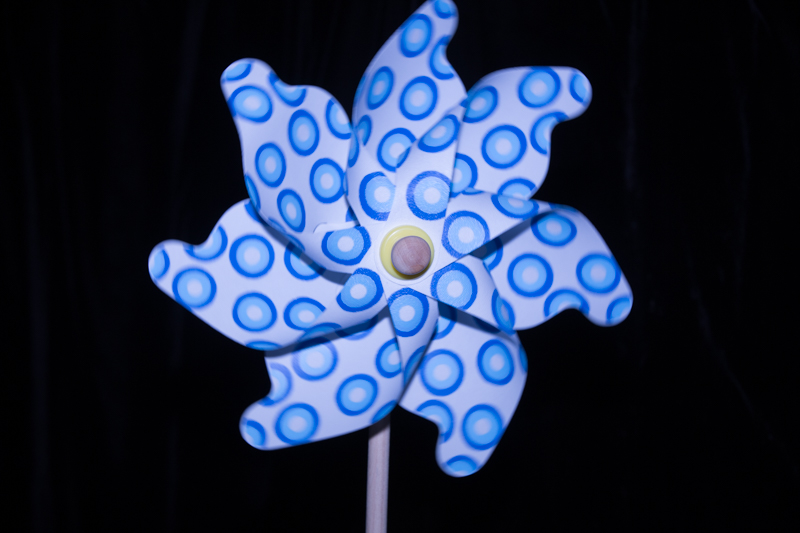
Even at 1/1000th, it’s still not totally freezing the motion of the pinwheel! There still a tiny bit of blur.

Kind of amazing.  With the shutter speed set to 1/60th, the pinwheel was tack sharp and had no motion blur, but with the shutter speed set to 1/1000th, you still see motion blur!

I found I had to go up to about 1/2000th to stop motion blur when using High Speed Sync in this test case:
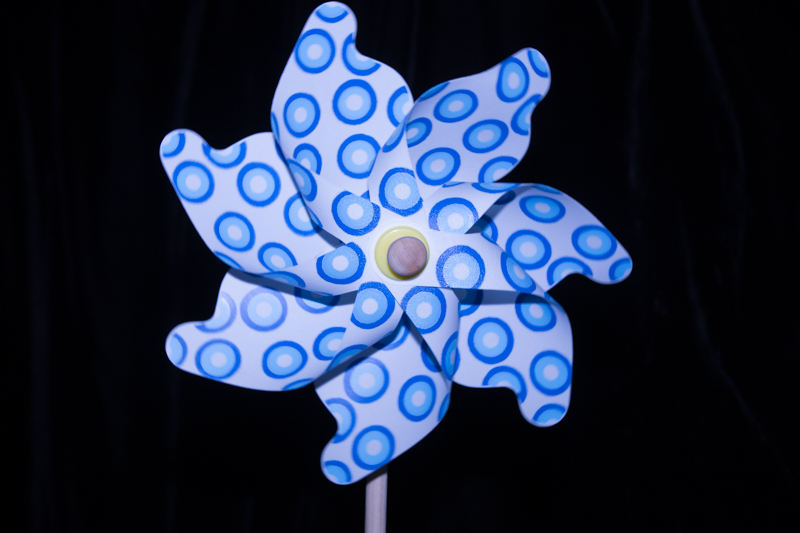
If you don’t use a flash, and haven’t dug into the details about how to operate your flash, you may never have encountered these issues.  I just thought I’d share these insights in case you are actively using a flash and are a Canon owner using High Speed Sync or Nikon Owner using Auto FP sync mode.

I hadn’t really thought about just how drastic HSS could impact motion blur until someone asked some questions about freezing motion by USING HSS and the more I thought about it, I realized that HSS really can introduce a problem in some situations, like in this test example.

For outdoor use, where you are mixing ambient light and flash though, I find HSS pretty useful!

Happy Flash Picture Taking!  🙂

Kevin Gourley

 

Share

Alien Skin Software: Exposure X2

First, I have to make a clear confession.  I am a proficient Adobe Lightroom user, and don’t have much experience with Exposure X2 from Alien Skin Software.  BUT I just took Exposure X2 out for a “test drive” and thought it was worthy of pointing out this nifty program to you all.   Yes, Exposure X2 can be used as a plugin from Lightroom, but it also can be used as a standalone program.

If you have experience with Adobe Lightroom, the first thing that you’ll notice is the incredible similarity of much of the user interface. With some portions of the program, you’ll almost feel like you are using Lightroom!  In spite of it feeling sort of like Lightroom, it’s definitely not Lightroom. Exposure X2 has an impressive set of photo adjustment tools built in.

You’ll quickly notice that there are not different “modules” for managing and organizing that are separate from the developing and editing of the images.  Unlike in Lightroom, it is all kept together in one interface.  That has some advantages.  Also, as soon as you start using Exposure X2, you might notice that you immediately have access to ALL of the images on your computer.  There is no need to first “import” them. They are just there ready to be edited when you open a folder.

When you do any editing, remember that Exposure X2 still does “non-destructive editing”, meaning that it doesn’t really change the image until you export it.  (Believe me, thats a good thing.) And it works handily with RAW and other image formats. As you look over the editing capabilities, you will see a range of additional tools not found in Lightroom, such as overlays of really cool borders, light effects such as flames and flare, infrared simulation, simulated bokeh adjustments, and a variety of textures.

All of these additional built-in editing tools make Exposure X2 still useful as a plugin in Lightroom even if you don’t use it as a full Lightroom replacement.  But keep in mind it is indeed a fully capable standalone program.  Just note that if you were to make a complete transition from Lightroom to only use Exposure X2, Exposure X2 will not automatically know about the edits that reside within the Lightroom catalog.  So even though the interfaces look similar, it does not mean it’s an instant switch to quit using Lightroom and switch fully over to Exposure X2.

As I mentioned, Exposure X2 is capable of browsing any drive or folder to view and edit images without having to use any sort of ‘import’ operation.  Its response is pretty snappy when you browse to a folder it hasn’t viewed before. Exposure X2 appears to be a well designed program, not just in its user interface, but “under the hood” with fast efficient processing of images, which you really need when you work with thousands of images.

OH and one last point. You can also use Exposure X2 as a plugin from Photoshop!  That is really cool because if you are proficient in Photoshop, you can use layers to mask in Exposure X2 effects in portions of an image or mix and blend the effects, further enhancing the value of using Exposure X2 as a handy tool in your bag of tricks along with other plugins and tools.

Check out Alien Skin Software and see if their software or plugins might be a fit for your photography workflow!

http://www.AlienSkin.com


P.S.  My students get a generous 10% OFF Alien Skin Software!  Thank you Alien Skin!

Happy Photo Editing!

Kevin Gourley

Share

Change Your Perspective

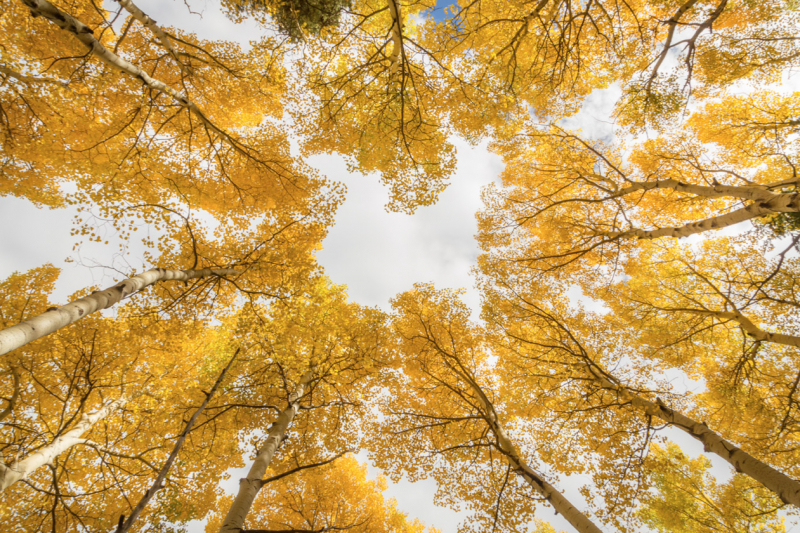
Looking for new ideas in your photography?  One easy suggestion is to simply change your perspective! Change how you LOOK at the world!  Instead of shooting from eye-level, how about putting your camera on the ground? Or take a photograph looking straight up or down!

Look for small details along a trail.

While the overall scene might grab your attention…

… look for interesting detail shots.

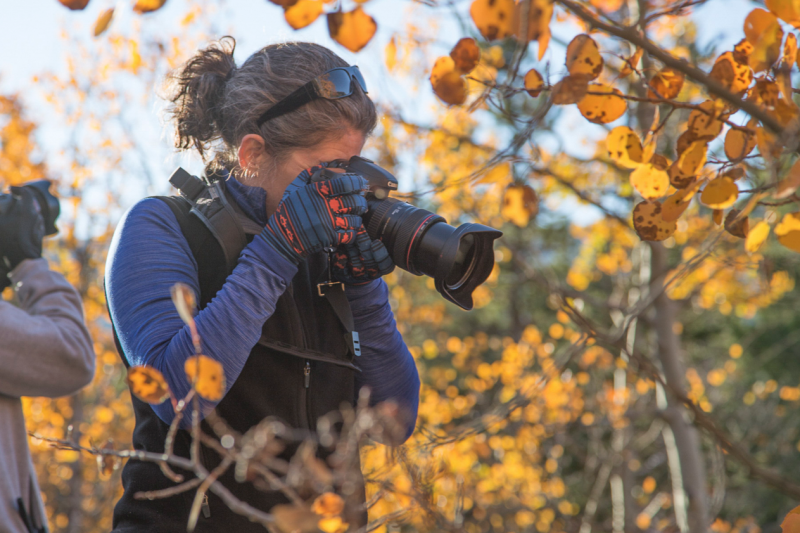
 When you are hiking on a trail, take the time to PAUSE and look around. Look up.  Look down. Look behind you.  Look in all directions. Sometimes, when you are hiking you miss things! Hiking for exercise is different than hiking for photography. S-L-0-W down and you’ll discover a beautiful world around you!
Happy Picture Taking!  🙂

Kevin Gourley

Share

PHOTOGRAPHERS: Make Plans Now to Join Us This Summer in Rocky Mountain National Park

If you love photography and you love the beauty of nature, then I urge you to seriously consider joining us on our adventures in Rocky Mountain National Park this Summer.   Our Rocky Mountain Photography Workshop will take you to beautiful mountain vistas, waterfalls, cascades, and rivers.  We’ll experience some sunrises from the side of a mountain as we watch the park awaken into a new day of adventure. We’ll photograph all sorts of wildlife including elk, moose, marmots, big horn sheep, and on occasion maybe even a bear.

It is hard to imagine the majesty of Rocky Mountain National Park.  It is a true national treasure.  You have to experience it for yourself.

You can register for our photographic adventure either as a 4 day or 9 day option.  Plus, we have two pre-trip meetings to prepare you for the trip.  This is your chance to experience this amazing place with fellow photographers. You’ll get your own great shots of mountains, waterfalls, wildflowers, and wildlife.

We stay in a wonderful lodge right on Fall River, just a couple of miles from the entrance to the park.  One evening, we host a cookout right on Fall River.  Unique to our workshops: You are welcome to bring a significant-other/family member (adult) along on the trip with you at no additional charge!

Student comments summarize the experience pretty well:

  • “The natural beauty of RMNP was enhanced by Kevin’s knowledge of the park and locations that were custom picked for great photographic shots. Kevin’s calm, patient and knowledgeable teaching style meant that everyone, at whatever level they were at, felt comfortable asking questions, making mistakes, learning from them and then getting immeasurably better pictures as a result. The improvement in my photography from Day 1 to Day 4 was unbelievable. I came thinking the auto settings on my camera really took better pictures than I did, and I left seeing and believing that the pictures I now understood how to take were vastly superior to anything the camera could capture in auto mode. It was a 5 star experience from beginning to end.
  • “This is a workshop you can’t afford to miss! I came to the workshop with a goal of never using Auto settings again… I achieved that and more. Kevin is such a great teacher and is able to work with photographers of all levels. He made everyone comfortable, I am from Virginia and did not know anyone in the group (as were several others) by the end of the work shop I had made a group of new friends! We were able to get so many landscape and wildlife pictures. The whole experience was amazing. I’m ready to sign up for the next workshop! Thank you Kevin” – Barb

TIME IS RUNNING OUT and SPACE IS LIMITED

If you are thinking about registering, please know our lodging options will go away pretty soon because Rocky Mountain National Park is a popular destination.  If you are “on the fence” or if you have any questions, please contact us NOW.  Let’s TALK before you miss out on such an amazing experience.

Want to learn more about the workshop or are you ready to register?  Click Here!

We truly want YOUR SMILING FACE in our next group picture
in Rocky Mountain National Park!

Share

Get Out of Your Comfort Zone

Yes this is a photography blog, but what I am saying really applies to all aspects of your life.

We are creatures who mostly live in the “routine” of daily life.  We keep doing what we’ve been doing because, well, it just feels easier.

When we were little, we were in our growth phase, where we were always learning, always growing, and the result was MAJOR ACCOMPLISHMENTS.  We learned how to talk. We learned how to crawl, then walk. We learned about language, and science, and history, and so many other things. We learned how to drive. We kept growing and growing. Why? Because we were constantly being pushed OUT OF OUR COMFORT ZONES.

And then for some of us, we had kids, and that was another comfort zone leap. It was that moment where we said “OMG, NOW what do I do??  This baby didn’t come with a user manual!!”

As our lives progress, it sometimes feels easier to grow complacent. We’re tired. We can’t find enough hours in the day. We have responsibilities to so many people. We lose sight of what matters to us as we meet the expectations of society or our family or our employer. We get on a treadmill of life, and just keep putting one foot in front of the other, and there we go, just doing what we have been doing, just to get by, and find ourselves wandering around in our comfort zone.

With photography, and almost everything else in life, if you want to GROW beyond where you are now, embrace the concept that your growth will happen if you intentionally step out of your comfort zone, just like you were doing when you made all of those big accomplishments as a kid.

Growth requires intentionality.  Want to get better in your photography? Push yourself to learn the aspects of photography you don’t know, or don’t just keep photographing the same subjects in the same way.  Pursue activities that lead you to improvement, that challenge you, that lead you to growth.

You may have heard this quote before:

“The definition of insanity is doing something over and over again and expecting a different result.”

Well, on the Internet, this quote has been attributed to Einstein, Ben Franklin, and Mark Twain. So, I have NO idea who originally said it, but I must admit it IS kind of crazy to just keep doing the same thing over and over again, and expecting anything different as a result.

Of course, I could give a counter-point: with many pursuits in our life, we DO need to keep doing the same thing over and over again, to PRACTICE in order to get better at what we do.  I learned to play the clarinet in school.  I definitely had to keep practicing over and over again, to get better.  But regardless of how much practice I did, the end result is that I just became a better clarinet player.  To go beyond just being a good clarinet player, requires pushing beyond clarinet playing, on to the next goal.

I started this post by saying “Yes this is a photography blog, but what I am saying really applies to all aspects of your life.” and it really is important for us all to think about what we want out of life.

The most exciting moments in life are those moments where we dare to go beyond the boundaries of our comfort zone and achieve something new and great and different and say “WOW, I can’t believe I did that!”

Where are you now, and where do you want to go with your life? See your comfort zone as just a resting spot, but not your destiny. Don’t stay there too long.

Share

ImagingUSA in Retrospect

Subtitled: “MY BRAIN IS GOING TO EXPLODE”

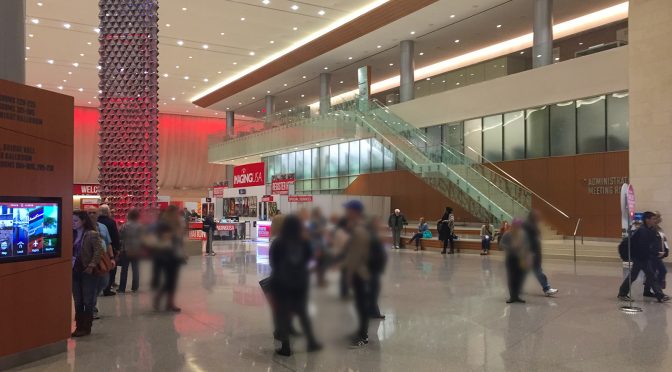
Another excellent ImagingUSA conference wrapped up this evening in San Antonio.  There were so many good insights shared.  I swear my brain is going to explode.  Can I process it all??  I have to spend some time going through my pages and pages of notes to discern what are my major “takeaways” from the experience.

Every person goes there and processes this event in different ways based on their prior experiences in photography, current needs, and visions of where they want to go next.   The key is to be willing to let the experience of ImagingUSA “speak to you” with an open-minded attitude to give you insights on how to be “better” in whatever ways you might need to be better.  That might be technical skills. That might be business insights.

I always come back from these events with bags of marketing materials from all the different vendors and then tens of pages of notes I took.  As I said, it will take me some time to process this and discern what MY major takeaways are.

The next step is the critical one.  What you learn at an event like this doesn’t matter as much as what you DO ABOUT IT.  Decide what action items result from your takeaway list.  If your whole experience does not lead to a set of action items, to put in practice what you learned, you have just wasted your time.

Whether you attended this event or not, I encourage you to spend some time assessing your direction in life. What changes might you make to make your life “better” by whatever measure you choose.  Choose “better”.

I assume you are a photographer, if you are reading this blog.  My desire is to help you in whatever way you need to achieve “better” in your photography. Whether it is to refine your technical camera skills, or managing light, electronic flash/speedlights, portraiture, creative imaging, using software to perfect your images, or a broad range of other topics, I am here, ready and willing to help you in your endeavors. Need a photography coach?  Need private teaching?  Need help assessing where you need help the most?  Let’s get together and work on your plan to be “better” in 2017.

Share

So Much Great Information and Insights at ImagingUSA!

Just one more day at ImagingUSA 2017!  It has been a great conference (as usual).  There are so many different learning tracks in the program, Adobe, Business, Commercial, Demos, Drones, Inspiration, Portraiture, Print for Success, School Sport & Event, Technique, Wedding, not to mention special programs and the pre-convention classes that were offered right before the start of the convention.

Simply the ability to see the work of so many other talented photographers has been great.  The Imaging Expo (tradeshow) is full of great vendors (and is a bit exhausting to cover it all).

I have had limited time to even keep up with emails, client contacts and inquiries, much less post on this blog.  There is one thing I did want to comment about though, that I am kind of happy to observe.

Ever since this thing called “HDR” (High Dynamic Range) photography came about, it has risen up to be a “phenomenon”. Everyone is doing it.  HDR has been out there everywhere in the photographic world lately.

I am old enough that I have seen fads come and go, and for a while (past several years) I have been saying HDR is another fad, something that everyone gets obsessed about for a while.   That is what I am noticing here at ImagingUSA. The “fad” is fading away to put HDR into its proper place.  I am not seeing the over-done, way over processed HDR images that are so common out there on the web still.   Yes, I see occasional nicely done, conservatively done, HDR images, but nothing over the top here.  HDR seems to be settling down into its appropriate place as just another one of many tools for creating excellent images.  Frankly the last thing you want to do is make every image an HDR image. That is not always going to give you the best results.  Only use it if it really makes the image better, but NOT all the time.

It is wonderful to see outstanding prints, excellent composition, appropriate use of light and shadow, form, technical execution and creativity and only an occasional touch of HDR IF it was needed to possibly enhance a photo.

I have always been obsessed with the use of light to create great images.  One of this evening’s speakers shared this quote by George Eastman that is still so VERY true today.

“Light makes photography.  Embrace light. Admire it. Love it. But above all, know light. Know it for all you are worth, and you will know the key to photography.” – George Eastman

That says it all!

Happy Picture Taking,

Kevin Gourley

Share

We’re at ImagingUSA in San Antonio!

We’re attending ImagingUSA in San Antonio!   This is a great conference for photographers, annually hosted by the Professional Photographers of America.  Lots of great speakers.  Many photography vendors at their ImagingExpo.

I’m looking forward to learning a few new things over the next three days!

The conference is starting out on a cold clear Winter day in San Antonio!  Brrr!

Kevin Gourley

Share

ImagingUSA in San Antonio!

ImagingUSA is an annual conference for pro photographers, held each January. This year it is in San Antonio with the main conference happening on January 8-10th, 2017!  It is hosted by the Professional Photographers of America (of which I am a member).  PPA is an excellent resource for anyone pursuing photography as a profession.  You don’t have to be a “pro” to enjoy ImagingUSA. Even hobbyists would really enjoy the conference.

There are so many great speakers and their vendor exhibit, called ImagingUSA Expo, is absolutely incredible.    If you can’t attend the conference, at least try to make it to the expo!

CLICK HERE TO LEARN MORE

Have fun!

Kevin Gourley


Share

Kevin Gourley Photography Workshops, Austin, TX – Austin Photography Classes