The Man with the Crooked Nose

I chose this article title because I thought it might attract your attention, mainly out of curiosity.

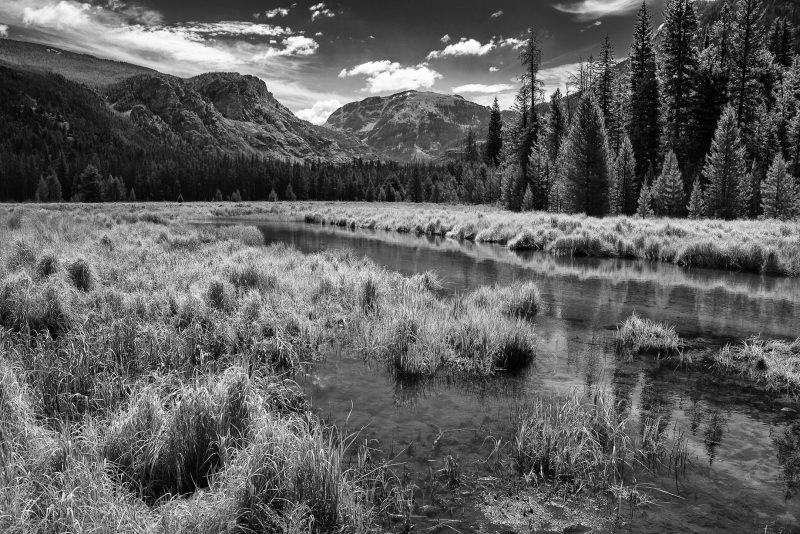
The man I am talking about is Ansel Adams. He lived 82 years and had a major impact on the art of photography, and yes, he had a crooked nose.  If you search on Google, you’ll find photos of him, and you’ll see, sure enough, he indeed had a crooked nose.

How did that happen? Well, as the story is told, he was injured in the 1906 San Francisco earthquake when he was a little boy.  An aftershock threw him into a garden wall, and his broken nose was never set properly, so it remained crooked the rest of his life.

He started experimenting with photography when he was around the age of 14, following a trip to Yosemite National Park. Over many decades that followed, he perfected his craft of photography and made major contributions to the art and science of photography with a passion to create outstanding images.  His photographic work is known around the world.

I thought I’d share a few quotes by Ansel Adams.  I figure his insights are way more important than mine:

  • “Sometimes I do get to places just when God’s ready to have somebody click the shutter.”
  • “You don’t take a photograph, you make it.”
  • “There is nothing worse than a sharp image of a fuzzy concept.”
  • “A good photograph is knowing where to stand.”
  • “To photograph truthfully and effectively is to see beneath the surfaces and record the qualities of nature and humanity which live or are latent in all things.”
  • “Some photographers take reality … and impose the domination of their own thought and spirit. Others come before reality more tenderly and a photograph to them is an instrument of love and revelation.”
  • “The only things in my life that compatibly exists with this grand universe are the creative works of the human spirit.”
  • “Twelve significant photographs in any one year is a good crop.”
  • “The single most important component of a camera is the twelve inches behind it.”
  • “Photography is more than a medium for factual communication of ideas. It is a creative art.”
  • “A great photograph is a full expression of what one feels about what is being photographed in the deepest sense, and is, thereby, a true expression of what one feels about life in its entirety.”

Most definitely, he was attentive to technical details, perhaps best known for his work with Fred Archer on the development of the “Zone System” for determining optimal film exposure, developing, and printing for perfect rendering of all image tonal values from black to white and all levels (zones) in between. I worked with the Zone System in my earlier years when I spent countless hours in the darkroom.

As I look over the many quotes by Ansel Adams that people post online I am grateful they keep his insights alive for the benefit of us all, but one thing stands out to me.  Most of his greatest insights were about how we see the world, how we appreciate the art of photography, and how we appreciate the beauty of the world around us, and even about how we FEEL.

When you look at the technical details involved in developing the Zone System, we see he was surely great at the technical aspects, but from what I can tell from his many quotes is that the “technical” is secondary to the “art”.  Or as he said, “There is nothing worse than a sharp image of a fuzzy concept.”

As many of you know, this is one of my concerns, that in this age of high tech photography, we can get all geeky about it and focus on fancy gear and miss what is most important, the art.

It is sometimes easier to obsess with “technically perfection” yet ignore the art aspects. We must always remember to focus on the art of photography: composition, emotion, light, shadow, mood, story telling, and so much more.  If we just focus on the technical stuff, we’ve missed out on what is really important.

Focus on what is important.  

By the way, it doesn’t matter that Ansel Adams had a crooked nose.

Happy Creative Picture Taking

Kevin Gourley



Share

Rainy Day Photography

It’s tempting to put away your camera on a rainy day. I encourage you to photograph the rainy days. There is something about the “mood” of a rainy day that is expressed well in art. Also the colors of nature are richer when it rains.  The greens are greener, the browns darken.

While we withdraw from the rain, nature embraces it as the giver of life. Wait for the rain to pass, but do so with your camera in hand.

Photograph the rain. Photograph the water droplets on flowers and leaves.

If there is lightning, that can add an element of visual excitement as well.

If you’re lacking inspiration on what to photograph in the rain, here’s an idea: Give yourself a project!  Search online for quotes about rain, and then try to create a photograph that “fits” with the quote.  Here are some quotes you might use:

  • “Some people walk in the rain, others just get wet.” – Roger Miller

  • “For after all, the best thing one can do when it is raining is let it rain.”  – Henry Wadsworth Longfellow

  • “The way I see it, if you want the rainbow, you gotta put up with the rain.” – Dolly Parton

  • “Into each life some rain must fall, Some days must be dark and dreary.” – Henry Wadsworth Longfellow

  • “Let the rain kiss you. Let the rain beat upon your head with silver liquid drops. Let the rain sing you a lullaby.” – Langston Hughes

  • “Rain is grace; rain is the sky descending to the earth; without rain, there would be no life.” – John Updike

  • “I always like walking in the rain, so no one can see me crying.” – Charlie Chaplin

Happy Picture Taking

Kevin Gourley

Share

A Matter of Perspective

Depending on the lenses you own, you can achieve different effects in image perspective through the focal length you choose.  The lens focal length is measured in millimeters (mm) and on a zoom lens the focal length is adjustable.  The lower the focal length, the more “wide angle” the field of view.  Higher focal lengths are said to be in the “telephoto” range.

One aspect about your choice of focal length that is worthy of mentioning is how your choice affects perspective and compression of depth as you go to the longer focal lengths.

A wide angle lens tends to make the foreground elements look more enlarged and the background appears more distant and smaller. Telephoto lens do just the opposite.  They tend to make elements in the background appear large. The longer the focal length, the more exaggerated the effect is.

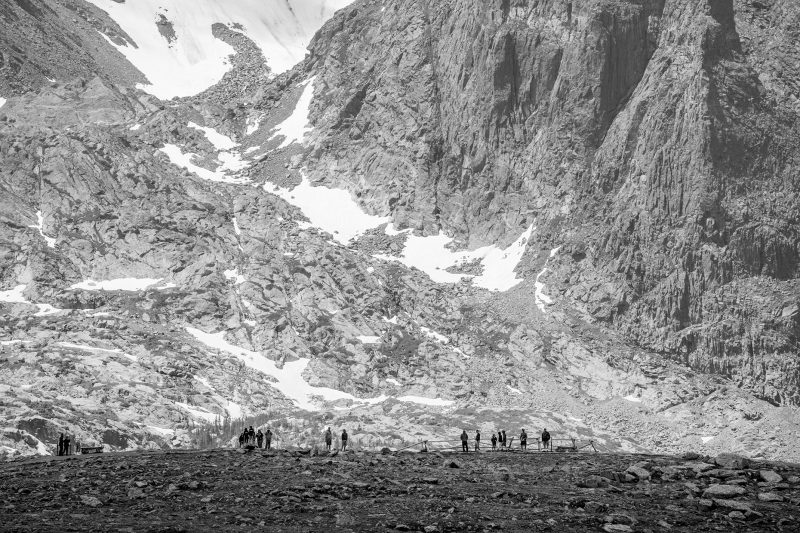
Take, for example, this image shot with a very long focal length telephoto lens (400mm). Note how the mountains look enormous! The mountains are big, but the choice of a powerful telephoto lens really emphasizes the majesty of the mountains.

Or in this shot below, taken with a moderately wide angle lens (24mm), the foreground is featured more and the mountains appear more distant and smaller.

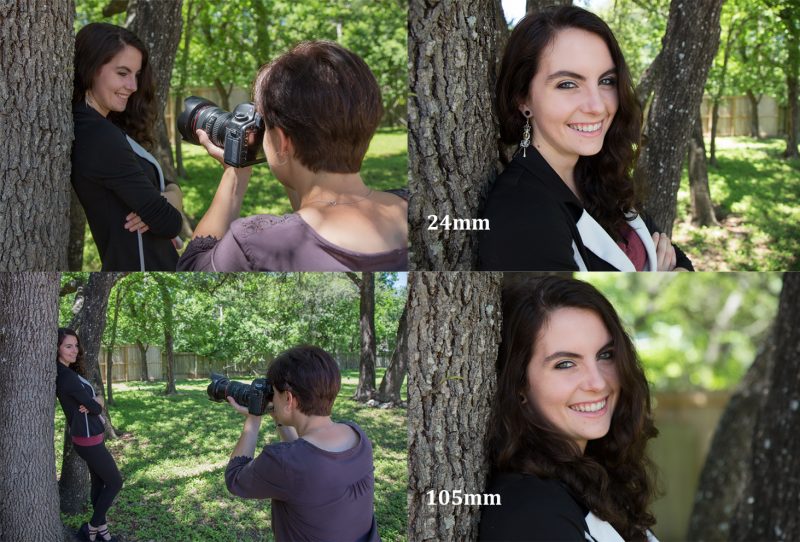
Focal length is an important consideration with portraits also.   A portrait shot with a wide angle lens will look different from a shot taken with a telephoto lens.  Generally speaking most portraits are best done in the 50mm to 150mm range (take into your camera sensor’s crop factor).

I love having a variety of focal lengths available to me so I can achieve the effect I desire, so I virtually always along both wide angle and telephoto lenses in my photography.

Happy Picture Taking!

Kevin Gourley

Share

And the Winner Is…

It’s that time of year where the Academy of Motion Picture Arts and Sciences recognizes excellence in cinematic achievements in the film industry, and so many people tune in to see who will win awards for their creative talent.

I love seeing people excel at their art, whatever their art might be. The Academy Awards is not just about excellence in art. There is a lot of behind-the-scenes politics that goes on, and jockeying to make sure “their” film gets noticed.  It’s only normal that would be the case because there are big bucks involved. Still, I’ll try to not be too cynical about it all, and just celebrate success in art.

I think about so many artists I know who are not “winners” in the sense of  having gotten an award, but I look at the art they are creating and I very much see them as outstanding artists. I see them as “winners”, even without an award. And I see some artists who are getting better, gradually perfecting their craft, and maybe still have a way to go (hey we all do, honestly) but when I look at how far they’ve come, I cant help but see them as “winners” also.

Photography is a form of ART that is really pretty technical. For some folks, the technical stuff can be a little overwhelming. For others, they just love the technical stuff, and in some cases get obsessed by it. (Ok, self confession, I have a Master of Science degree in Electrical Engineering, thus I have a degree in being  a “nerd”) For us nerds, we have to be careful to not let our nerd-ness get out of hand.

Especially when you are bombarded with all the marketing out there, you can be lured into thinking that you simply must own all the highest quality technical gear available today: the absolute sharpest and fastest lenses, the “highest quality glass” (lingo for fancy lenses), cameras that go to ISO 3,280,000 or can shoot 11 frames per second or have a huge sensor, the most expensive lights available, etc.  Now I am NOT saying that having good quality gear is bad at all. But what I am getting to is that as much as we might be tempted to think that our photographs will turn out so much better if we had the best gear available to us, that just doesn’t turn out to be the case.

This is ART.  Creativity, talent, skill, and knowledge of how to make the best use of what you own matters way more than having the most fancy equipment available.  Ultimately, “technical perfection” is not the “winner”. Strive to create great art, regardless of what camera  you own.

Or here’s a musical analogy: You may have seen this youtube video of a street drummer doing some pretty cool drumming with plastic buckets. No fancy drums. Just plastic buckets.


I encourage you to push yourself to excel at your art. Don’t worry about how fancy your gear is.  Just focus on using it better. Sharpen your skills. Ask questions. Learn. Make mistakes. Learn some more. Get better.

And don’t worry if your work is not as good as others’ yet.  Just keep striving to be better.  If you keep doing that, in my view, YOU ARE A WINNER.

Happy Picture Taking,
Kevin Gourley


Share

The Value of a Photograph

If I go through all of my possessions, I find I really could discard most of them and it wouldn’t bother me all that much. Sure, some of the things I own are “necessities”, but the majority are really possessions of convenience.  Even if they are necessity or convenience items, they are mostly replaceable.

And then there are a few things that fit in the category of “memorabilia”, those items that bring back a special memory, a vacation souvenir, a child toy, maybe even a dog collar.

Confession: I just can’t resist those machines you find in various vacation spots where you put in two quarters and a penny, and it flattens the penny into a souvenir.  I know, it’s kind of goofy, but I like those.  They aren’t just some trinket that was actually made in China.  They are actually made right there, in front of me, at the moment when I was standing there in that spot. I have collected about 20 or so over time.

Another thing that is uniquely “made right there” is a photograph, and that is what I love about photography.  A photograph “captures a moment in time”, embraces it, and hangs onto it for me.  When I want to go back to that moment in time, all I need to do is look at that photograph again.

When it comes to that question of what possessions I truly value, the photographs are the ones I could never discard, nor could I ever replace them.  They are about the only possessions I have that I could honestly say are “priceless” to me.

Some of my priceless photographs aren’t even priceless because they take me back to a memory in my life. They reach even farther back in time, prior to my life.

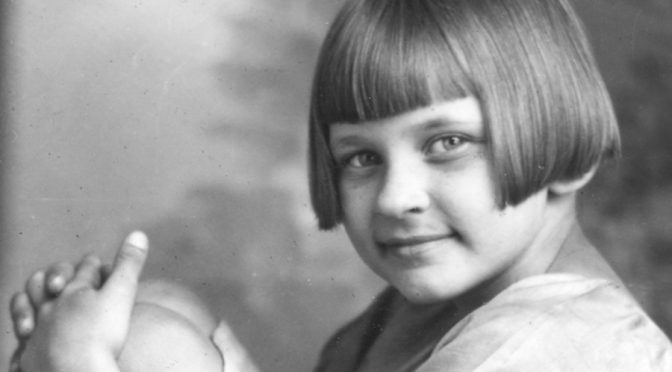
That photo I posted, for example, is a photograph of my mom when she was a little girl.  I believe it was taken by her dad who was a professional photographer almost a century ago.

I love photography because it tells our life story. In the end, when we leave this world, virtually ALL of our possessions, the “necessities” and the “convenience” items, are most worthless to others … except for the photographs.  I love having that photograph of my mom.

Some of the photographs you take today may become priceless possessions to someone else later on.   What a gift.  You can create something “priceless” by simply pressing a button at the right time. That is even better than a flattened penny.

Some day, when I leave this world, my flattened penny collection may become worthless to others, but some of my photographs will live on.

Remember the importance of the photographs you take.  They are the story of the lives of the people you love. They are priceless.

Happy Picture Taking,

Kevin Gourley

Share

Rocky Mountain Summer Photography Workshop – FILLING UP!

Hi Photographers!

I just wanted to give everyone a “heads up” warning if you were contemplating joining us on our Rocky Mountain Photography Workshop this Summer!   Some options now have only ONE SPACE LEFT!

WE WOULD LOVE TO HAVE YOU JOIN US on this grand photographic adventure in beautiful Rocky Mountain National Park!

CLICK HERE FOR MORE INFO and to register

Share

Clarinets and Cameras

I’ve used this analogy in several of my classes, so some of you have already heard this. 🙂

I love music. In many ways I think perhaps it is humanity’s most beautiful and complex art form.  It is an art that can be expressed individually or collectively as a group of musicians in a band or orchestra. Music can be produced and enjoyed in so many different ways, and there is no one “right” way.  Music gets inside us, gets inside our brains. A melody, words in a song, can inspire us, bring us to tears, make us smile, take us back to a moment in time.

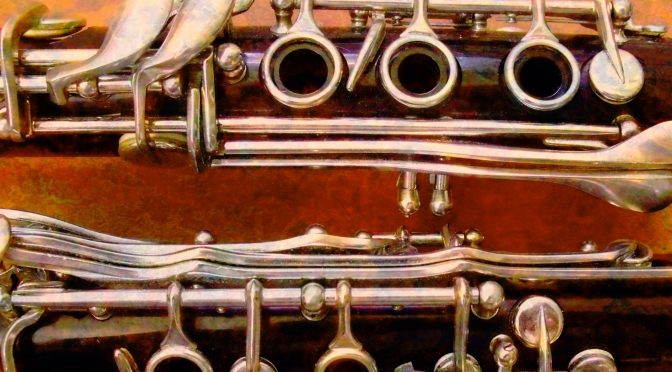
I learned how to play the clarinet when I was around 13 years old. Wait, let me rephrase that. I started learning how to play the clarinet when I was around 13 years old. (It took a while.)

Have you ever heard a beginning clarinet student play that instrument?  Wow, you can make a lot of bad noise when starting out. I feel sorry for what my parents had to endure when I practiced at home in my bedroom. Day after day, I practiced. Getting a little better over time, but boy did it take a while to get beyond just making noise.

Learning an instrument starts out as a technical exercise. You even have to learn how to place your mouth on the instrument right. (It is not as obvious as you might think.) You have to learn how to place your fingers on the instrument in the right way. And in creating the various notes, you have to press your fingers down or lift them up in the right order or it won’t work right. It is a bit complex.

And then there is the music theory you have to learn also. What is an eighth note, a half note, a rest? What is staccatto? Tremolo? On and on.

You spend a long time learning enough of the technical stuff before you really get to what is interesting: the music. Eventually, you have learned enough to discover the real beauty of the art is not in all the technical stuff of where you put your fingers and how you read sheet music, but rather it is how you make something beautiful with your instrument.

There are some similarities with photography. Granted, you can pick up your instrument, in this case a camera, and immediately start taking pictures (and it’s sure not that way with a clarinet). The more you learn the technical stuff, you can produce even better art with your camera because you have more ability to be creative with your instrument. You can go beyond the limitations imposed by using a camera in its fully automatic modes.

As you dig deeper into learning the technical parts of photography, it is important to remember the real objective is to get beyond the technical to explore the art of photography more fully. Learn the technical, but don’t get hung up on the technical. Learn the rules but don’t be afraid to play with the rules, bend the rules, maybe even break the rules if needed. Stay focused on creating art.

Art is more of an emotional thing than a technical thing. The technical stuff is really just a necessary means to an end.  The fun really begins once you have learned your instrument and you start creating beautiful art with it. That is true whether it is a clarinet or a camera.

Music has many different genres, and so does photography.  I encourage you to explore different genres of photography. Try new things. Explore. Experiment. Fail. Experiment some more. Learn from your mistakes. Discover what you like. Discover what you dislike. Eventually find your passion in the art.  Find what you love, and do that. Find a way to express YOUR view of the world through your images. Don’t just copy others. The world loves a creative artist who expresses their art in ways they have not seen before.

Create something beautiful. Be an artist.

Happy Picture Taking

Kevin


Share

Protect Your Lens

The first thing I do when I buy a new lens is put a “UV Haze filter” on the front, mainly to protect the lens.  If you ever have something hit the front of your lens and scratch it, it is cheaper to replace the filter than to replace the lens.

Every lens I own has a filter on it to protect it. There are times where you might need to take it off, if the extra layer of glass causes any problems with light flare or reflections.  That is most likely to happen if you are pointing the camera toward light sources such as street lights at night or looking toward the sun.

You will find some people who believe putting any additional layer of glass on the front of a lens degrades the image quality, but frankly that impact is so very small, it is really negligible compared to the value of having the protection provided by the filter. The only time it is really a concern is if there is a problem with flare.

Most lenses show their filter size in millimeters (mm) somewhere on the lens, usually on the front.  The filter size is not the same as the focal length.  So, look for the right filter size before you make a purchase!

Filter Size

Be safe or sorry!

Happy Picture Taking!

Kevin Gourley


Share

Managing ISO

You may already know about the ISO setting on your camera.  This setting controls the camera’s sensitivity to light.  The higher the number, the more sensitive it is to light.  For hand-held photography, generally you can shoot at lower ISO settings in bright scenes, and you will have to move to higher ISO values in lower light.

There is a tradeoff when you move to higher ISO values.  The image becomes more “grainy” due to a phenomena called “digital noise” that degrades the photo.   Cameras are getting better all the time with abilities to go to very high ISO values.  Generally you want to avoid the highest ISO settings on any camera, and stay as low as possible.  Built-in high ISO noise reduction and features to reduce noise in programs like Adobe Lightroom can help, but you are still better off not having the ISO go higher than it needs to be.

How high does it “need” to be?  The answer lies with the shutter speed.  If you are shooting hand-held, the shutter speed needs to be fast enough to minimize motion blur caused by hand movement.  A very general rule of thumb is to keep the shutter speed at 1/(focal length), so it depends on the focal length of your lens.  The longer the focal length, the faster the minimum shutter speed should be.   Other factors like sensor crop factor and whether you have Image Stabilization/Vibration Reduction also affect that, but the general rule is a good starting point.

The other reason you might need a higher ISO to achieve a faster shutter speed is if you are trying to freeze motion of the subject in the photo, as in sports or active wildlife.

As you move to higher ISO values, you can shoot at faster shutter speeds.  If you need the shutter speed to be twice as fast, simply double the ISO.

Assuming you  are just trying to minimize the effect of hand motion blur, there are two ways you can deal with the problem.  Move to a sufficiently fast shutter speed using the rule above, increasing the ISO as needed, OR put the camera on a tripod.  If the camera is on a tripod, you don’t need to move to a high ISO to minimize hand vibration. That shutter speed rule ONLY applies when shooting hand-held.

Auto ISO

Many cameras offer a feature that can help you get sharper hand-held shots.  Canon and Nikon deal with it a little differently so I’ll explain both approaches.

Canon  has a special ISO setting called “Auto”.  When you use Auto ISO while shooting in Av (Aperture Priority) Mode, the camera takes control of the ISO to try to ensure the shutter speed is fast enough to minimize blur caused by hand vibration.   So, if you increase the lens focal length, you’ll see the camera automatically increase the ISO.  Or in Tv (Shutter Priority) Mode, the camera ensures the ISO is high enough to enable you to use the shutter speed you have chosen.  Or in Manual Mode, you can set the shutter speed and aperture to whatever you want and the camera will try to pick an ISO that enables you to use those specific settings.  Auto ISO is pretty handy.  On my Canon EOS 6D, it does a pretty good job with Auto ISO. But note that this is primarily used when doing hand-held photography.  When shooting on a tripod, you don’t need to follow that hand-held shutter speed rule and you don’t necessarily need to raise the ISO to higher values because the camera is already stable because of the tripod.  (Note: turn off the Image Stabilizer when shooting from a tripod.)

ISO Sensitivity Auto Control

Nikon doesn’t have “Auto ISO” but has something similar.  Nikons have ISO Sensitivity Auto Control.  You have to configure its settings through the menu.  The basic idea is that the camera lets you pick the ISO and if the camera detects that you have made a poor ISO choice for hand-held photography, it automatically intervenes and changes the ISO to a more appropriate value.  There are various parameters you can control from the menu, so you’ll want to check it out.  Again, this isn’t necessarily appropriate if you are shooting from a tripod.

I encourage you to explore these options and become familiar with how they work.  As with all tools, they have a time and place where they come in handy.

Happy Picture Taking!

Kevin Gourley

Share

It’s Time for You to Learn Adobe Photoshop!

VALENTINE SPECIAL!   Sign up by 2/14 and SAVE $30!

Unleash Unlimited Potential in Your Photo Editing in Our Adobe Photoshop for Photographers Workshop!

This is the last call for registrations!  Class begins next week, and we have decided to extend our $30 Early Registration Discount to Valentines Day.

The course is split into a Basic and Advanced sections.  If you take both, you’ll be well introduced to the power of Photoshop in editing photographs, and even explore creating images that go beyond “reality”.  It is so much fun!  Also, by taking both the Basic and Advanced sections, you can take advantage of that special $30 OFF discount (if you register by Valentine’s day)!

  • Photoshop Basics Evening Class
    • Two Sessions
    • Thursdays February 23, March 2
    • 6:30-9:30pm
    • 6 Hours of Hands-on Learning
    • SMALL Class Environment
  • Photoshop Advanced Evening Class
    • Four Sessions
    • Thursdays March 9, 16, 23, 30
    • 6:30-9:30pm
    • 12 Hours of Hands-on Learning!
    • SMALL Class Environment

CLICK HERE TO LEARN MORE AND SIGN UP!

Photoshop is great for making any kind of image enhancement!

  • Retouch skin
  • Soften wrinkles
  • Enhance eyes
  • Enrich colors and contrast
  • Minimize “fly away” hairs
  • Remove unwanted background distractions
  • Slim a few pounds (if you already blew your New Year’s Resolution)
  • Add an out of town family member into your family photo
  • Enhance the sky
  • Do “composite” editing where you can place the subject into a totally different background
  • Get creative and do ANYTHING you can envision!

For example, in the photo below, it was created in Photoshop as a “composite” from three different photos taken in completely different places and a daytime scene was transformed into a mystical cold wintery night scene.  Really, once you learn Photoshop, the only limitation left is your imagination!

Share

Kevin Gourley Photography Workshops, Austin, TX – Austin Photography Classes