Just Be Grateful

This has been a challenging time for us all.

I could list all the reasons this year has been so painful… the devastating impact to so many small businesses, people who have lost a loved one to COVID-19, not being able to visit aging family members, tough decisions about putting kids in school, etc. but where do I stop? The list would get quite long.

Then add to this the terrible ways people are treating each other in the midst of this outrageously polarized political season. I am amazed and a bit heartbroken in seeing how people are treating each other. This has all made a bad situation worse, as if the pandemic alone was not bad enough.

And then there has been the unprecedented wildfires in Colorado, burning nearly half a million acres of my favorite place on Earth, in Rocky Mountain National Park.

And then there are friends who have been battling cancer, some having already lost their battle, plus a dear friend recently died unexpectedly in a car accident.

I must admit I have been struggling to deal with all this lately. In a sense, I guess I am suffering from 2020 depression. I find myself just emotionally depleted.

And then I remember all the truly beautiful friends in my life. I am so blessed.

And then I will never forget how so many people responded to help us and our small business through the GofundMe Small Business Relief Initiative and other ways they helped. This helped us survive this unexpected pandemic. It has all been so humbling. We still have some tough months ahead, but this GofundMe campaign and other generosity of friends and clients is proving to be a lifesaver for us.

Our Sanity Walks
Every morning, Gail and I go on a 3.5 mile walk which I have been calling my “sanity walk.” We usually walk through our neighborhood or on some of the nearby hiking trails in the hills near our home. While on our sanity walk, I will often photograph something that catches my eye, using my iPhone. The point isn’t to create some amazing photograph. It is more about simply appreciating the small things in life, the things I might be tempted to walk on past and just take for granted.

Gratitude
Anyway, on this day where “melancholy” perhaps best describes my feelings about 2020, I must remember to be thankful because in spite of all that has been hard, I have seen the beauty in the world around me and in the beauty of all of you. I will focus on the acts of kindness I have experienced from you and on the ways I can devote myself to acts of kindness for others.

We take so much for granted, even when we don’t mean to.

I think the key to a well-lived life is to focus on being grateful.

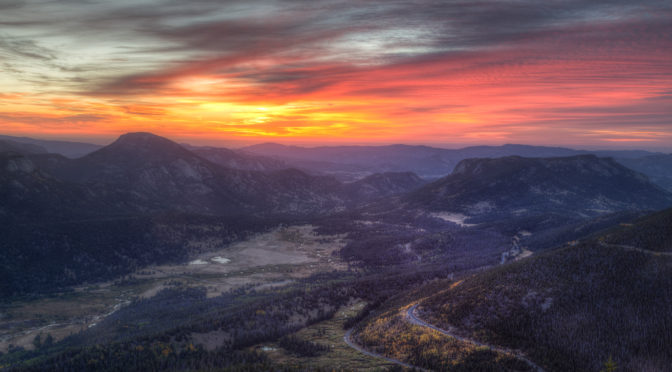
Recently on one of my sanity walks, I stopped looking at the “things” we walked past, and just looked up at the sky. I mean, how often do we give thanks for the sky? Sure we might notice a pretty sunrise or sunset, or maybe an interesting cloud formation, but what about the rest of the sky?

I just started thinking about the beautiful blue sky in the cool morning air. All I could see was the light blue, but beyond that, beyond my ability to see, is the expanse of the universe. That thin layer of atmosphere is what protects our planet from the harshness of space. It is what sustains our life. Yet another thing I normally just take for granted.

I guess I just felt like writing this, at a time when 2020 is getting me “down” and wanted to intentionally remember that this world is surrounding us all with so much to be grateful for. Don’t take ANY of it for granted.

Hug your family. Hug your friends. Go out and hug your neighbors (maybe a virtual hug for now). Hug your dog or cat. Go out and even hug a tree.

Go out for a walk and devote the entire walk to thinking about all the things you are grateful for. That is, if you can walk. Remember even the ability to walk is something to be grateful for. If you can’t walk, you still can find so much to be grateful for.

Once you LOSE one of those things you have taken for granted, you will be reminded once again, you have been blessed by so much more than you realized.

Just be grateful for it all.

Kevin Gourley

P.S. If the isolation of COVID-19 is getting you down, join our LifeInsights group! All are welcome and invited.

Share

Loving Rocky Mountain National Park

I have been leading photography workshops in Rocky Mountain National Park for years and I have been in love with that park ever since I was a child. Watching the recent fires sweep through portions of the park has been deeply heartbreaking. So many of us Rocky Mountain National Park lovers have been watching news reports, posts on social media, and getting text messages and photos from friends in the area, holding our breath as we witness the place we love burn.

We are so grateful for the heroic efforts of the thousands of firefighters who fought valiantly the raging fires to save structures and to try to hold back the spread through the park. We are so sad to see the damage in the Kawuneeche Valley, especially in the Grand Lake area. Our hearts go out to the people of Grand Lake and Granby. The town buildings of Grand Lake were saved but still so many homes were destroyed and so much of the area around the town burned.

While the fire spread through the park, carried by high winds, and fueled by so many pine beetle damaged trees, there is still so much of the park that has not burned. The fire is still not under control but at least has diminished quite a bit because of the much welcomed heavy blanket of snow.

Several people have asked me if the places we visit in our Rocky Mountain Photography Workshops have all burned up. The answer, thankfully, is no. In fact, MOST of the places we visit were spared by the fires. The hardest hit area that we do visit is the Grand Lake area.

What about 2021’s Rocky Mountain Photography Workshops? Yes, most definitely we will be doing the workshops again in 2021!

Currently we have reduced the size of our group as part of a COVID-19 restriction, but we could enlarge our size again, depending on how this whole COVID-19 thing pans out by next Summer and Fall. We consider your safety to be important and we believe we can do these workshops within local and federal guidelines. (We’ll always err on the side of precaution/safety rather than carelessness.)

In spite of the pandemic and in spite of the fires, we have an even greater resolve to ensure we do the workshops again in 2021 to help support the local economy for our friends in Estes Park and Grand Lake.

We pray the fires get under control and further damage is limited in our favorite place on earth.

Kevin Gourley

Share

Learn Photography – Private Sessions May Be For You!

I have many years of experience in photography and in teaching the art and science of photography to photographers ranging from beginner to full time professionals.

Maybe it is time to take your photography skills to the next level through private one-on-one instruction. I have many students who take advantage of this option!

  • We can focus on your specific needs
    • Photography skills
      • Creative and fun photography projects
      • Photo editing and organizational skills
        • Adobe Photoshop and Lightroom Classic
        • Computer configuration and setup (if that intimidates you)
        • Help with problems you’re experiencing
    • Scheduled at times that best fit your scheduling needs
  • Online via convenient Zoom sessions or in-person (conforming to required “social distancing”)
  • Different price options available depending on the amount of time you need
  • New this year: Special “Teaching on Retainer” option where you can save even more by booking a larger block of time and use me as your “go to guy” for photography help all throughout the year.
  • Want to do a shared session with a few of your photographer friends?
    • We can arrange a small group session on any topic or fun activity!

Student Comments – Rated 5-Stars! *****

See what Kevin’s private instruction students have been saying…

  • “You have been so helpful, Kevin! This private learning was the perfect option for me! My schedule is often crazy but you did a great job helping accommodate my needs. I learned so much from you. I finally understand “metering modes” and “exposure modes” and your help in teaching me about Photoshop and Lightroom has been fantastic. Thank you!!”
  • “I have learned so much from you about how to more effectively use Adobe Lightroom Classic! I can’t believe how many things I was “doing the hard way” and now I am able to work so much more quickly when organizing and editing my images. Thank you!!!”
  • “I absolutely love Kevin’s teaching style. As someone who is a hands-on learner, I felt especially grateful for all of his practical examples.” – Meredith Yinger
  • “I am the definition of a beginner when it comes to photography but Kevin was extremely kind and patient. I was worried that the amount of information would be overwhelming but the way he structures his lessons and the manner in which he teaches makes it not only easy to understand but keeps you focused and wanting to learn more. His passion for photography coupled with his wonderful teaching style make his classes the perfect addition to anyone starting out in photography or for those wanting to expand their skills.”
  • “I loved how Kevin listened to my questions and the specific issues I wanted pointers on. As a photographer with moderate skill level, it was amazing to learn so many new things.” – Taylor Montgomery
  • “It has been such a pleasure to get all my questions regarding LR’s Organization module answered by Kevin through demonstrations with my files. He is very good at explaining every step he is taking, and why. He is responsive to all questions with clear explanations, and a sense of humor. All in all, a great coach!”
  • “Thank you again for the great classes! I was quite intimidated by my Sony A 7rII camera that I received as a gift from my husband. Not having any experience with a “real” camera (just my iPhone camera), I thought that this camera was so far over my head that I would never be able to take it off Auto mode. I was not sure where to start. Thankfully I found out about Kevin’s photography classes and signed up for 2 private sessions. I have learned so much in those two classes! His method of teaching is very easy to follow and understand. I feel that I learned a lot more about photography in general than just the functions of my camera. This really helped me process the information and has given me the confidence I needed to enjoy my camera. My second class was today and the first class was about 5 days ago and I have used my camera more in this last week than I have since I got it 2 1/2 months ago. I know I have a long way to go but at least I got going! I highly recommend Kevin’s classes to anyone who, like me, needs help getting started. I plan on taking more classes from him like Lightroom in the near future.” – Lynn Rome
  • “I have loved photography my whole life and recently have taken a couple of group classes (with another photographer) so I could switch completely to manual mode. The group lessons left me with more knowledge but many questions. I did some research and found Kevin and signed up for private instruction from him. It was the best thing I did. Kevin is very organized, detailed oriented and easy to work with. His studio is great and he has all the tools required to demonstrate what he is teaching. He listened carefully to my questions and then began to go over in detail and in a manner I really understood not only the answer to my questions but things associated with my questions that I didn’t even realize I didn’t know. Since my private lessons I feel my photography has gone to the next step, I have more confidence in what I am shooting and my pictures are better than ever. I would recommend Kevin if you really want to learn how your camera works and you want to improve your pictures.”   – Emily Spencer
Share

TED Talk Watch Party: “America’s Native Prisoners of War” – Photojournalist Aaron Huey

Monday October 12, 2020 7:00pm CDT
Columbus Day / Indigenous People’s Day

© Aaron Huey

TED Talk Watch PartyAmerica’s Native Prisoners of War – Photojournalist and National Geographic Photographer Aaron Huey
Join our online Zoom session and we’ll watch the Aaron Huey’s powerful TED Talk and discuss.

Aaron Huey’s effort to photograph poverty in America led him to the Pine Ridge Indian Reservation, where the struggle of the native Lakota people — appalling, and largely ignored — compelled him to refocus. Five years of work later, his haunting photos intertwine with a shocking history lesson.

Contact Kevin (kevin@kgphotoworkshops.com) to get the link to the Zoom session. This is part of our LifeInsights Group which hosts many other activities, TED Talk discussions, inviting occasional fascinating guest speakers as well. All are invited and it’s always free!

All images below are © Aaron Huey.

Check out our other upcoming
activities in our LifeInsights Group!

Share

Correcting a common misconception

Hey friends! I thought I should post a comment about this common misconception about the use of a flash diffuser in wildlife photography.

A few years ago, I took a quick snapshot with my iPhone of a photographer’s setup photographing elk over 50 yards away. In fact, he wasn’t just a photographer, he was a photography instructor leading a group of other photographers on a “wildlife photography workshop.” I have since seen numerous “photography experts” advising the use of this exact setup, with the claim that a flash diffuser like the one used above will “soften the light and blend it more naturally in wildlife scenes.”

I don’t want to embarrass anyone who may do this, but actually this advice is totally incorrect. Adding a flash diffuser on a speedlight/flash while shooting wildlife with a telephoto lens like this is totally pointless, so don’t bother following that advice from “experts” who claim it is so important to do so.

Let’s say you just put a flash on top of your camera, without a diffuser. Depending on whether your flash has a zoom capability, its light distribution will vary a bit, but the light will be projected outward like below.

The only portion of the light that illuminates the elk are the light rays in the red region. The light that goes above the elk, into the sky, has no effect on the photograph.

IF you use a flash when doing wildlife photography, really the only thing you need to make sure you do is to not have the flash be a dominant source of light. It should only be adding a small amount of light on the animal, otherwise the photograph will not look natural.

In this case, with the elk being 50 yards away, it is not likely the flash will even have that much effect on the photograph, given the inverse square law of light will result in only a small amount of light illuminating the animal. That’s ok since you don’t want much light contribution from the flash anyway.

Now, let’s say we add a diffuser on the front of the flash because so many “experts” say that will soften the light on the animal. Note below how the light rays are just scattered more broadly by the diffuser. Doing so, does not “soften” the light whatsoever. It only scatters the light.

Again, the only portion of the light that illuminates the elk are the light rays in the red region. The light that goes above the elk, into the sky, has no effect on the photograph. And the light rays are just as much coming from a pinpoint source of light, and the light on the animal will not be diffused any more than if you used a flash without a diffuser. The light actually illuminating the animal will look exactly the same either way.

What’s worse, adding a diffuser will cut down on the light output of the flash by maybe 2 stops or so, right when the flash is already limited in being able to have much effect on a subject 50 yards away.

What that means is the diffuser, at most, is really just causing you to burn through batteries much more quickly because the flash will most likely have to push out a full-power pulse of light to have any effect at all, AND the light isn’t diffused anyway. And harder you make the flash work, the slower the recycle times.

Some people have questioned me on this, saying they have noticed that when they use a diffuser, it does seem to “soften” the light and make it not look as much like a flash was used. Actually, when that happens, what is really occurring is the diffuser is inhibiting the light output, so the ambient light is more dominant and the flash is less dominant. It is not really softening the light from the flash. It is just diminishing its light output by a couple of stops. You could also reduce the light output by reducing the power level of the light, or if you are shooting with TTL, use the flash exposure compensation to reduce the light output, and save your batteries. No need for a diffuser, ever, for a scenario like this.

Of course, this is a bit ironic, considering that little white device you can attach to your flash is often called a “diffuser” and ads for those devices often boast how they soften and diffuse the light, but that really is for indoor use where it scatters the light more broadly so it will bounce off more surfaces like walls and ceilings. For outdoor use, you won’t be bouncing the light off the sky. Keep your diffuser for indoor use. 🙂

Happy picture taking!

Kevin

Share

Waiting for “normal”

This long endurance test imposed on us by COVID-19 is making us all weary. Here I sit in my studio that once had a thriving business with all sorts of activities happening in here each week, and now it mostly sits as an empty space, void of activity for the past 6 months with no end in sight. Of course there is the stress of monthly payments of rent, utilities, phone, Internet, security monitoring, insurance for this space I am hardly using.

Our studio is technically open for business and we are carefully following CDC recommendations and protocols but the demand is just not there right now for studio photography. So we are just hanging on, and waiting for better times while picking up a little business here and there.

I will be forever grateful to all who extended helped us out with our GoFundMe Small Business Relief Initiative Campaign. Your help was a life-saver for our small business.

Even though this has had a hard impact on my studio photography business and in-person classes, it have not been sitting around idle, waiting for better days. I have been working hard, scrambling to add all-new online classes to replace our many in-person classes I used to teach at my studio.

In a sense, we are reinventing ourselves to adapt to the new normal, just as many other businesses have had to do, such as restaurants who have had to alter their services to focus on take-out orders or curbside pickup. (I haven’t figured out how to do curbside headshots, but maybe I need to!) People are giving good reviews of our new online classes and we will continue those.

Also as an effort to help out others who have been feeling the financial crunch of this pandemic, all of our online group classes are set up where you can name your own price. We give a suggested price, but you can pay a little more to help us out, or pay a little less if you are financially struggling also. This plan has worked out very well.

Also our FREE Monday night LifeInsights group continues to meet, but we are doing so online via Zoom meetings.

Even though we are adapting, I still so much look forward to “normal” life again.

I guess I just want to say… “I miss you all.”

Here are a few photo memories of great experiences. My career has led me to meet to many truly wonderful people.

Kevin

Share

My Book: 30 Practical Tips for Better Photographs

Our photographs express our unique personal view of this world. Through our photographs, we are visual storytellers. We grasp fleeting moments in time, with images that help us remember special events, places, and people in our lives.

Because they tell our life story, our photographs have intrinsic value. We might even discover that some of our photographs are “priceless” to us, so it is worth spending a little time to learn how to take better photographs since we value them so much!

These days, most of us have cameras with us all the time, built into our smart phones. You can take a great photo with your phone, but there are some significant limitations with these devices. Of course, the best camera is the one you have with you at the time you need it, so that smart phone in your pocket or purse can really be handy at times.

If you have taken the next step into the wonderful world of photography, you may have bought a camera that has all kinds of wonderful features which will allow you to take a much better photograph. Some cameras have several automatic modes and other features you possibly find confusing or frustrating. You might occasionally get some really nice shots, yet other times, the camera doesn’t do what you want it to do and you are frustrated with the results. I wrote the book, “30 Practical Tips for Better Photographs” for you.

Lots of people think they just need to buy a better camera to take better photographs. Then they experience disappointment when the “better camera” isn’t taking better pictures. The real key to better photographs is to learn what YOU, as the photographer, need to DO to take better photos.

The camera is just a machine, getting smarter and smarter with each new product introduced, but it is STILL just a machine. No matter what camera you own, if you learn how to operate the “machine” better, you will get better results!

My book offers 30 practical tips to create consistently better images by showing you how to control the most important features of your camera. Put these recommendations into practice and you definitely will get better photographs!

I don’t want you to accidentally take a good photo every once in a while. My goal is to help you discover what you need to know to take great photographs consistently, not accidentally!

Whether you are using a digital SLR (DSLR), a mirrorless camera with interchangeable lenses (MILC), or a fancy point-and-shoot camera, this book will help! Sometimes I might mention Canon or Nikon or Sony specifically, but much of what I cover applies to other brands as well. Canon and Nikon and Sony make great cameras and they dominate the current photography market, but other camera brands such as Pentax, Olympus, Fujifilm, etc. are also good cameras. Don’t think you need to go out and buy a Canon, Nikon, or Sony if you currently have another brand.

I recently saw an ad online for a used camera and the ad said: “Takes great pictures.” That would be like posting an ad for a paint brush and saying: “Paints great paintings.” What matters more than how fancy your camera is, is how well you know how to use it.

I have taught photography workshops to beginner and advanced students for many years and I am well aware of the challenges photographers face that sometimes lead to disappointing results. My experience in teaching is what has led me to include the various chapters I included in my book. There is a lot more to photography that could take hundreds of books to cover, but I tried to distill it down to the most important things you need to learn to begin to master your camera.

I hope you’ll buy a copy! And also remember I reach a broad range of classes.

Happy Picture Taking!
Kevin Gourley

Readers are saying: “highly recommend” “many useful tips” “easy to read, learn and apply” “an excellent book for anyone wanting to improve” “very well written” “explains camera terms in a way that you understand” “a wonderful guide” “a great resource” “this book should always be in your camera bag

Share

Reaching Back a Few Years

I have loved photography for quite a long time, since my high school days over 40 years ago. I wholeheartedly dove into photography, learning everything I could, sharpening my camera skills, then learning B&W and Color darkroom techniques. I did my own film developing and printing. I did studio work, portraiture, landscapes, nature, really all aspects of photography, all while in my teen years. I even taught my first photography classes back then as well!

In a nostalgic way, I sort of miss those days when we created images on film and had to wait to see the results after the images were developed, and I miss the long hours spent in the darkroom. It was truly a different craft than what photographers do today. I miss it, but I’m not ready to go back to shooting with film. It is a bygone era, except for a few folks who are going “retro” and having fun with film, exploring the world I knew so well so many decades ago.

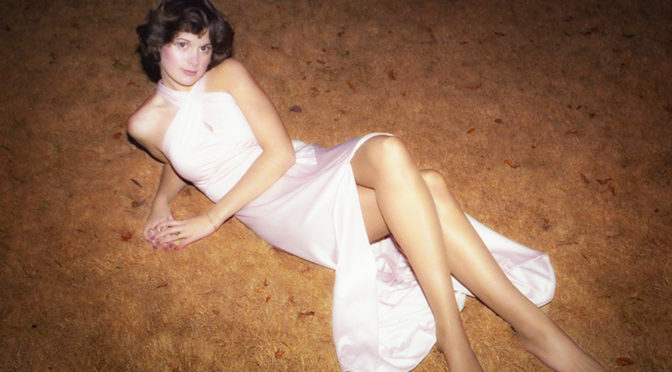
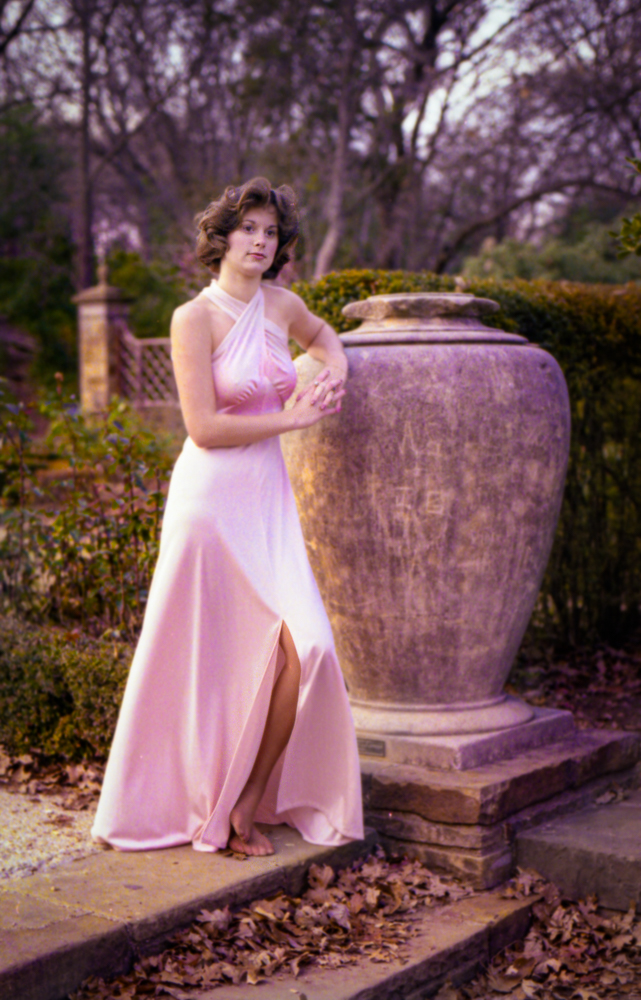
Looking back on all of my wonderful experiences with a camera in hand, I am grateful for the memories. I’ve included a few images, below, that I created wayyyyy back when I was a teen.

In whatever type of photography you pursue, I hope you find the part of it that you LOVE.

Kevin Gourley

Share

I Get By With a Little Help from My Friends

I guess most of you have heard of the song “With a Little Help from My Friends.” Well this blog post really has nothing to do with that song. :-}

In this blog post, I am really am just briefly talking about how much a little help from electronic flashes / speedlights can enhance a portrait. They are my best friends for portraiture on location whether indoors or outdoors. The key is to use them to enhance and blend with the ambient light in the scene to make the image better.

I have seen so many people say they hate using speedlights because they just don’t like the results they get, the light is too harsh. Actually the trick is to use them in the right way. Of course, you sure don’t want to add bad light to a scene. Use speedlights to add good light, to a scene. By “good” I mean light that has attractive qualities, mixing in soft diffused light, or adding subtle highlights intermingling with the ambient light. You can do this with various light modifiers such as reflectors, photographic umbrellas, or softboxes.

So, this post is intended to just encourage you to not give up on speedlights. Just use them in the right way at the right time. They are your portable magic light sources if used in the right way. They are your friends.

Want to know about my next online class on using flashes/speedlights? Click here

Want to listen to the song by the Beatles? Click Here

🙂 Kevin

Here are a few photographs that were created with a little help from my friends.

Share

Go Long! (Telephoto that is)

Depending on the type of photography you are doing, you may find your camera’s best friend is a long focal length (telephoto) lens! Especially for nature, wildlife, birds, and even landscapes, having a really good telephoto lens in your arsenal of camera gear can be so valuable.

What do I typically carry in my camera gear when I am doing nature photography? I have a Canon EF 100-400mm f/4.5-5.6L IS II USM

This lens has served me well on my various adventures in wildlife and nature photography in the Colorado Rockies.

The Image Stabilization in this lens is excellent, which is great for those moments where I am shooting hand-held in lower-light early morning scenarios or on overcast days.

Also, its ability to focus as close as 3.2 feet is exceptionally useful for wildflowers and butterflies, etc.

I also sometimes use a Canon EF 2.0X III Telephoto Extender for those shots where I need the added boost in focal length.

For example this shot below was with my Canon 100-400 with the 2X extender, boosting my effective focal length to 800mm. I really don’t use the extender all that often, I find it useful when I need the added focal length.

But What About You?

If you photograph wildlife, birds, wildflowers, butterflies, a long telephoto lens might be perfect for you! Especially getting up into the range of 400mm, 500mm, 600mm is quite useful. (Remember if you have a non-full-frame sensor, take into account the crop factor. Ex: A 200mm lens on a camera with a 1.5 crop factor is effectively a 300mm lens.)

Image sharpness and good stabilization is critical. Lenses vary in their degree of sharpness, distortion, vignetting, minimum focusing distance, focusing speed, etc. so shop carefully. There are many review sites out there to help you analyze and compare.

Image stabilization, just to be clear, is the technology built into the lens and/or camera body to minimize the impact of hand vibration/movement when shooting hand-held. It goes by many names, Image Stabilization (Canon), Vibration Reduction (Nikon), Optical Steady Shot (Sony), and many more. Depending on the lens/camera, this feature will allow you to shoot at slower shutter speeds than would otherwise be feasible, which also means you won’t have to resort to really high ISO values to get fast shutter speeds (which is the only other way to minimize hand motion blur). Consider this a must-have feature!

Beyond features, you also have to take into account your budget. Decide what features are worth paying for and which aren’t. Also weight is an important consideration. A lens could be outstanding but if you plan on carrying it on a 10 mile hike, you might not like it as much.

Depending on the make and model of your camera, here are some lenses you might want to check out. (Make sure the lens is compatible with your camera body!)

Do you have a favorite telephoto lens that is not on this list? Let me know, and I’ll add it. This is not meant to be an exhaustive list of all lenses that are on the market. These are just some of the better ones available today! Of course, I haven’t used all of those lenses personally, so check reviews and weigh tradeoffs.

Happy Telephoto Picture Taking My Friends!

Kevin Gourley

P.S. I have a variety of great online interactive photography classes starting soon! Check them out!

Share

Kevin Gourley Photography Workshops, Austin, TX – Austin Photography Classes