A Series of Moments

I am grateful for my life.
I am grateful for my family.
I am grateful for my friends.
I am grateful.

When I reflect back on my life, I really don’t think of it as a continual stream of memories. It’s more like a series of “mental snapshots” of special moments that were life-changing in one way or another; some more significant than others, yet still all important to me.

For some of those occasions, a photograph was taken to remember the moment. For many more, no camera was involved, but I still remember.

Heading Off to College

This is an example of a moment where I happened to have my camera with me.  

I was 17 years old. I had my Plymouth Duster all packed up and ready head off to college.

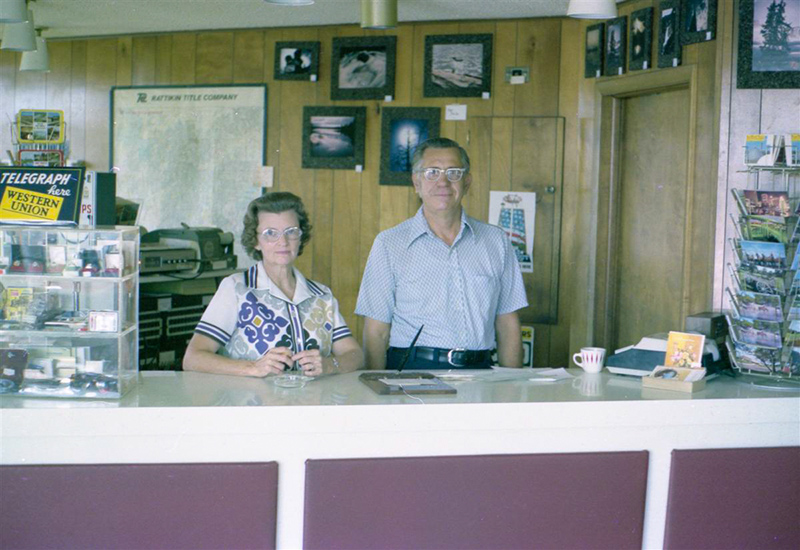
After leaving the house, I stopped by to say goodbye to my Mom and Dad who were both still at work.  While I was excited about leaving, I was also a bit nervous about this new life I was entering into. As I said my goodbyes and was walking out the door, I turned and paused, and took a snapshot of them.

I wanted to remember that moment. I then stepped out the door and entered into a new phase of life.  Only now in hindsight, knowing what it is like as a parent to send off my kids to college, I have a deeper understanding of what a major moment it was in my Mom and Dad’s life. I am glad I took this photo. I bet if I had shot a closeup, you would see tears in their eyes.

That Girl I Met

There were countless other major moments where I didn’t have my camera with me.  Like the time I was in college and was making color prints in the darkroom preparing for an upcoming photo contest and this girl named Gail walked in and I said “hi” not realizing she would one day become my wife and mother of my two precious daughters.

A Perspective Shift

And there was the moment where I became a Christian.  Having been an I-don’t-know-what-I-believe person for the first 27 years of my life, this was a major moment in my life. If that doesn’t make sense to you why that would be such a big deal, well, all I can say is I can understand that.  Remember, I was not a Christian for 27 years, and that stuff about Jesus didn’t seem to be big deal to me either… back then.   But to my surprise, it really changed my life for the better in more ways than I can possibly explain in a blog post.  In fact I would say it is a major “defining moment” in my life.

Death

Then my Dad died.  It was my first experience being with someone I love as they died.  That was tough.  No photograph of that moment either, but it is indelibly burned into my memory.

Life (Wow x 2)

Less than two weeks after my Dad died, in a whirlwind of emotions, our first daughter was born. Wow.  Just wow. Another big defining moment.  And then 3 years later we had a 2nd child. Wow, all over again.

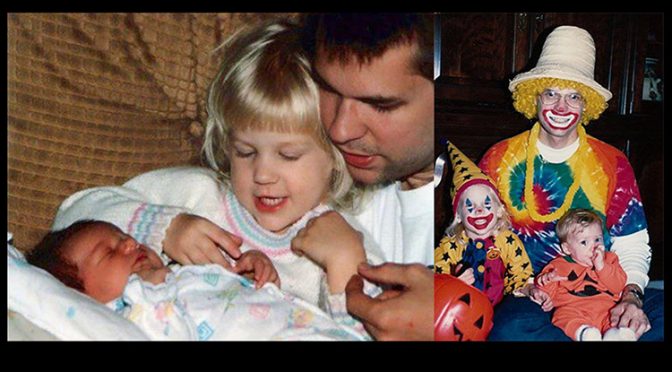
I think, of all the experiences in my life, being a “Daddy” to my two precious daughters tops everything. They mean the world to me. Fortunately, I have photographs of many of those special moments. I’d call those “cherished memories.”

A Clown

Yes, that’s me, the big clown on the right. I tended to be a bit silly on Halloween. 🙂 Some people might say I am still a big clown.

A Lifetime of Wow Moments

I could go on about so many more moments, but I am not trying to tell my life story here… walking both daughters down the aisle at their weddings, the birth of our grandkids, and so much more I could tell.  More “wow” experiences, most definitely.

We Are Shaped by These Moments

I just want to say how much we each should take an “inventory” of the special moments in our lives, some of them “wow” moments, and realize how those moments have shaped us to be who we are. It explains why we each see the world differently, and maybe we each need to just appreciate and embrace the differences.

I have so many wonderful friends, and I love them just the way they are.  Many of my “mental snapshots” of special moments in my life involve some of you who are reading this. And then, some of you I have not yet met.

Whatever your story is, whatever your life experience is, embrace that which is good in your life, hold onto those memories, and take photographs when you can.

The Most Important Thing About Photography

This is a photography blog.  I wish I could say the most important thing about photography is to impress others about what awesome lighting you have achieved, or how well you do HDR image processing, or your mastery of your Photoshop skills, or how many photography contests you have won. Actually the most important thing about photography is the remembering of the most meaningful moments in your life.

I love you all.

Kevin Gourley

P.S. Every photographer would probably do well to include a quote by Ansel Adams in their writings, so hear ya go:

“A great photograph is a full expression of what one feels about what is being photographed in the deepest sense, and is, thereby, a true expression of what one feels about life in its entirety.” – Ansel Adams

Share

CANCELLED: Photographers: Share Your Best 2017 Vacation Photos!

THIS IS CANCELLED
We decided to cancel this event because most of the responses we received indicated that Friday just doesn’t work well!  Sorry!  We’ll plan a new date.


Did you travel to some beautiful
locale this Summer?
Did you photograph the eclipse?

We’d love to see some of your
very best shots!  
 

When:
Friday September 8, 2017 – 6:30pm

You are invited to join us for a “potluck slideshow” in early September where everyone brings some light potluck food item and we do a slideshow of your best images from your travels.

If you’d like to join us and would have some images to share, let me know.  Click Here

What:
Potluck Slideshow – Sharing your best vacation photos from 2017

Where:
Kevin Gourley Photography Workshops Studio
11740 Jollyville Rd. Suite 400, Austin, TX  click here for directions


Share

Thank You From Kevin

Reflecting back on all of the photographers I have taught over the years, I have to say, for me, this is not about earning an income. Sure, since I am neither retired nor independently wealthy, I have to earn an income in order for me to be able to do this, but that is not WHY I have chosen to teach photography.  I frankly could have made way more money in my previous career.

When I reflect back on the people who influenced my life the most, they were all teachers. I have always had a lot of respect for teachers.  And I have always loved teaching.  Since I love photography and I love teaching, it is only natural for me to teach photography.

Actually teaching photography sharpens my skills as a photographer, and doing photography professionally empowers me to be a better instructor, but what motivates me the most has to do with my respect for the art of photography.  Photography is not just about creating pretty pictures. It is more meaningful than that.  Photography is an important way we tell our life stories about our adventures, our vacations, our celebrations, our sorrows, our tragedies, and our accomplishments.  Photography captures the record of our human experience on this earth.

Our photographs grasp onto fleeting moments of time, embracing those moments, and remembering them, to be appreciated at a later time.  Some of our photographs rise to something beyond just a “snapshot” and become a “priceless possession” remembering a moment we can never go back to, or a memory with a loved one who is no longer with us.  A few of our photographs can even become cherished possessions. The bottom line is that photography is important, and I see the endeavor of teaching photography as therefore important.

I have so many wonderful memories with so many of you, in teaching photography, and experiencing some real adventures with you. Thank you for participating in my workshops, and thank you for the memories. I love photography, and I can honestly say I love you all.  You are truly wonderful people. My life is better for having known you.

Kevin Gourley


Share

Featured Photographer: Penny Hannan

Your Name: Penny Hannan

Type of Camera: Canon EOS Rebel T3i AND – Galaxy S8

What do you love to photograph the most?
Flowers, skies, pets, family – NATURE #1

What is one thing you have learned that has improved your photography?   ISO…light is everything!  I think 100 ISO is my favorite!!!  OUTSIDE

Advice you’d give to others wanting to grow in their photography skills:  Take a beginning course for a refresh of what’s current and go out and take a lot of pictures – take your camera everywhere and change the settings for fun.

Share

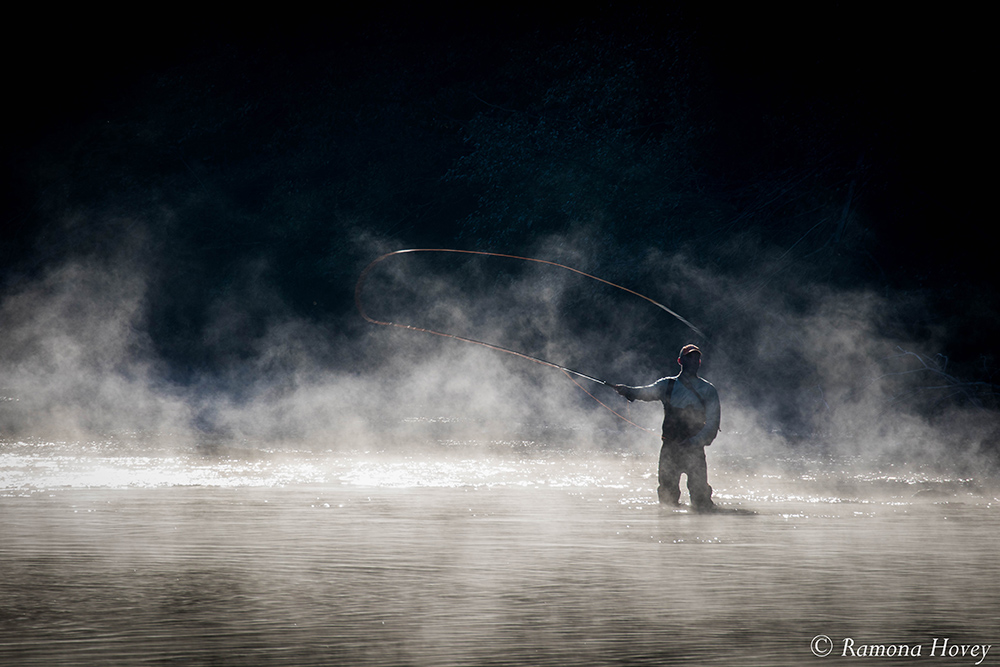
Featured Photographer: Ramona Hovey

Your Name: Ramona Hovey

Type of Camera:  Canon 7D Mark II

What do you love to photograph the most?   Anything related to my travels – building, landscape, and especially people.  I love experiencing cultures and capturing stories through the eye of the lens.

What is one thing you have learned that has improved your photography?   Taking time to observe the world around me and thinking through how to convey those feelings in my photography

Advice you’d give to others wanting to grow in their photography skills: Don’t be afraid to step out of your comfort zone and try new things.  Change up your normal settings, photograph something that isn’t your normal “style”.  And don’t forget to live in the world – not just photograph it!

Share

10 Steps on the Path to Better Photography

If you want to improve your photography, here are some practical  suggestions:

  1. Don’t Skip Over “The Basics”
    Lot’s of people just use their camera in fully automatic mode and never take advantage of all of the wonderful capabilities built into the camera.  The first step to better photographs is to understand the fundamentals of photography and how to operate your camera.  I offer a Photography 101 Fundamentals of Great Photography Course that is a good starting point.
  2. It’s Really About the Art of Photography
    While it’s tempting to think that advanced photography is about all that geeky stuff like apertures, shutter speeds, depth of field, exposure compensation, white balance, (I could go on forever), the real goal is the art of photography.  The technical stuff is just the means to that end.  The more you know the technical stuff, the more you are able to create what you envision and you are no longer at the mercy of the fully automatic modes that limit your control.  In my Photography 101 course, I don’t just focus on the technical side.  We also explore a bit about the art of photography and about the meaningfulness of this art form in our world.
  3. Advance Your Skills, Advance Your Art
    I can only cover so much in Photography 101.  There are numerous more advanced techniques to further enhance your photographic skills which I cover in my Photography: Mastering the Fundamentals Workshop.  That’s a day long class where we push deeper into important technical aspects that can help you create consistently better photographs.  Again, the whole purpose for this focus on the technical, is to eventually move beyond the technical, to the art.
  4. Have You Stopped Progressing in Your Photography?
    If you keep focusing on doing the same thing, you’ll keep getting similar results.  It is really important to push yourself beyond your current skills, to explore different aspects of the art and science of photography.  I have a workshop for that, called Rekindle, which I offer upon request. We just need a few students to organize a session of this great class. This might be just what you need to break out of “doing the same old thing.”
  5. It’s Sure Not About the Megapixels and Fancy Gear
    You’ll find that beautiful art, captivating images do not have to be created with high megapixel cameras and the finest lenses.  Good art is about composition, light, balance, proportion, story telling, posing, timing, concept, emotion, none of which has to to do with megapixels.
  6. Don’t Upgrade Your Gear Until You Know Why You Are Doing It
    Slick marketing and dazzling lists of “features” can tempt us to go out and spend thousands of dollars, only to find our photographs aren’t any better. You might be lured into buying a new camera, when in fact a specific lens might be more helpful. Or maybe what you need to do is buy a new tripod instead of a new camera or lenses. Yes there are compelling reasons to buy new gear, but be sure you know what problem you think you are solving by making that purchase, otherwise think twice.
  7. Before and After Firing the Shutter
    I am a big believer in getting the image right in-camera as much as possible.  Pay attention to those factors that ensure excellent images, the right depth of field, an appropriate shutter speed, all kinds of camera settings, BUT this does not mean your job is done once you fire the shutter! You can do SO much to enhance images and to create beautiful digital art using Adobe Lightroom and Photoshop and other software and image editing plugins. I offer classes in both Adobe Lightroom and Photoshop, usually adding them as students make requests for more classes.
  8. Explore Other Aspects of Photography
    Keep pushing yourself to try new things, such as High Dynamic Range Photography and Painting with Light and other fun activities.
  9. Study Light
    This is really important: STUDY LIGHT. The more you focus on getting the light right, the more you will find your photography improving.  Light is beyond the camera. It is out there, in front of the camera. It’s not a camera setting, although camera settings DO matter.  Managing light, shaping it, softening it, diffusing it, reflecting it, blocking it, enhancing it, coloring it is all part of the job of creating better images.  And… by the way… I have a class for that:  Light & Photography Workshop 😉
  10. Make Mistakes
    Push yourself. Challenge yourself. Don’t just keep doing what you have always done. Go beyond that. Make mistakes, and then learn from your mistakes.  If you are not making mistakes, you are not pushing yourself hard enough.   Try things you have never tried before. Expand your skills and learn more.
Share

Featured Photographer: Deborah Cole

Your Name: Deborah (Debby) Cole

Type of Camera:  Nikon D7100

What do you love to photograph the most?   I have married my love of the out of doors with my photography all of my life.  If I could travel somewhere, hike to an out of the way spot and then capture it with my camera (no matter what the equipment!) I was in heaven.  This is still true today.  I am in my “happy place” when I have my hiking boots on, a backpack with lenses and tripod and my trusty Nikon!

What is one thing you have learned that has improved your photography?   What I have learned: to be open to new techniques.  By listening and watching the pros I pick up not only the BIG ideas, but also the little tips and tricks.  Photography is a talent/skill where you never stop learning and experimenting.  I have also learned not to be stingy with my shots.  This is NOT FILM!

Advice you’d give to others wanting to grow in their photography skills:  My advice to others is to travel, travel, travel with the pros.  Or to take classes and workshops with the pros.  Also, follow the pros on instagram or facebook and look at what they shoot.  Then, practice, practice, practice.  Shoot, shoot, shoot.  R&D (rob and duplicate) is OK.  Then listen to your own inner creativity which we all have!

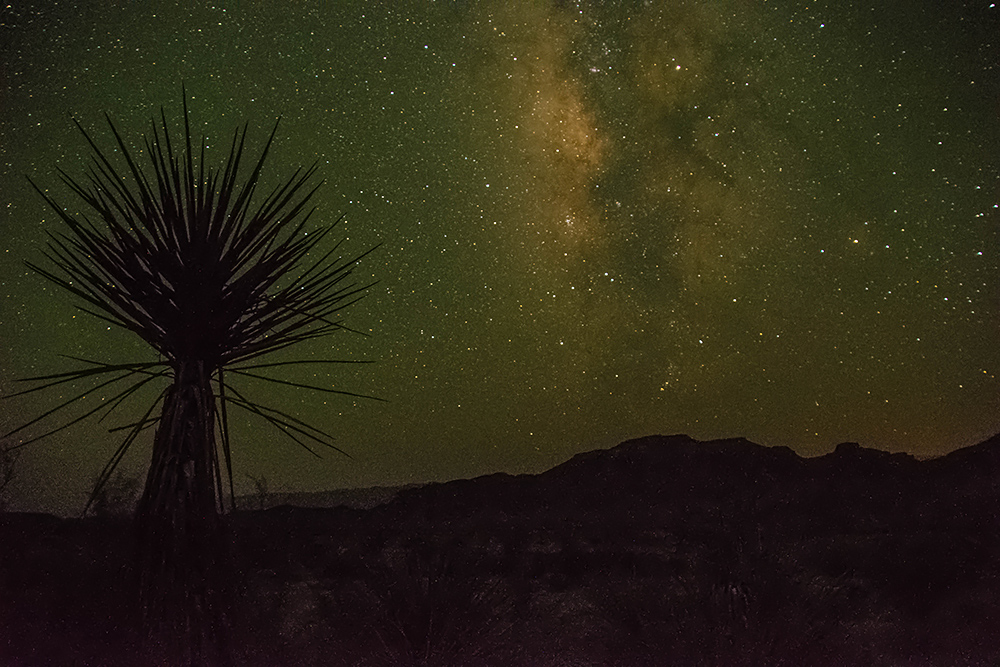
My example is my first night photography.  I have always avoided shooting at night, but I was surprised at how much I enjoyed it.  I shoot not only for the result but for the experience of the shoot.  Shooting at night causes one to slow down even more.  And slowing down and feeling the experience is so essential for me.
My next efforts will be toward shooting people in their natural environment.  Street scenes and capturing the story is something that inspires me.
Share

Featured Photographer: Katherine Malm

Your Name: Katherine Malm

Type of Camera:  Fuji XT2 and Canon 5DMarkIII

What do you love to photograph the most?   I am still drawn to landscape and nature, but these days I prefer to have people and other elements that tell a unique story of the moment. Much of my recent work has been street photography.

What is one thing you have learned that has improved your photography?   Getting the technical aspects of photography and post processing under my belt were key elements in being able to make photographs my own but none of that can ever replace the ability to see and capture a photograph or a moment. I’d much rather see a technically imperfect photo than a boring, same-as-everybody-else shot with perfect technicals.

Advice you’d give to others wanting to grow in their photography skills: Pick up your camera every day. Continue to grow your technical abilities with expert help from people such as Kevin (I always introduce him as my guru!). Get a camera that you love to carry and use but don’t get something new until you’ve truly mastered what you have, whether it’s a body or a lens. See the world as if any moment can be a photograph but only capture what moves you and tells a story of unique or special place, time, event, feeling or emotion.

Share

RESCHEDULED! Helping Persons with Dementia and their Caregivers – Fundraiser Concert

SORRY, THIS EVENT
HAS BEEN CANCELLED!

TO BE RESCHEDULED FOR THE FALL


Hi friends!  I will be photographing a fundraiser event, and I just wanted to help spread the word about the fundraiser, and extend a personal invitation for you to attend the event and help support this worthy cause.  If you currently have, or have ever had, a loved one with dementia, alzheimers, etc. you will understand why this is so important.

  • What:  
    House of Friends’ 11th “American Songbook” Annual Benefit Gala
  • Featuring:
    Austin’s Kris Kimura Quartet – Playing American classics through the decades, scrumptious hor d’oeuvres and desserts, and a prize drawing. Special thanks to major sponsor, the Austin Jazz Society.
  • When:
    Friday June 16, 2017 6:30pm CANCELLED
  • Where:
    Bethany United Methodist Church, 10010 Anderson Mill Road, Austin, TX   512-258-6017  get directions

What Does This Support?
All proceeds will benefit House of Friends, a FREE respite program for those with early stages of dementia. This weekly social program provides a supported day for the dementia participant and offers the family caregiver a much needed respite from their 24/7 caregiver role. Socialization, exercise, singing, games and a healthy meal are part of this therapeutic day. Please join us in this annual fundraiser to benefit the non-profit House of Friends.

CLICK HERE for more information and to purchase your tickets!

Want to know a bit more about House of Friends?  Watch this video:

Share

10 Common Problems Photographers Encounter

Since I have taught so many photography workshops, I’ve seen all kinds of problems photographers regularly encounter.  Some are minor problems, while others are really big deal total show-stoppers! I decided to pull together this list of 10 common problems. Trust me, there are more, but 10 just seems like a good number to discuss for now. 🙂

  1. Shutter speed was not fast enough for a hand-held shot and the result was a photograph that was not sharp.  It looked like it was maybe out of focus, but the real issue was motion blur because you can’t possibly hold the camera still enough to shoot at a slow shutter speed.  This is by far the biggest problem I see photographers encountering.  The solution is simple.   Make sure the shutter speed is fast enough by using this as a guideline:  Keep the shutter speed faster than 1 / focal length of your lens.  (So, if your lens is zoomed to 200mm, make sure your shutter speed is at least 1/200th second.) That is an approximate rule, but it really will make a difference.  If your shutter speeds are not fast enough, shift to a higher ISO and that will allow you to shoot at faster shutter speeds.
  2. Image Stabilizer/Vibration Reduction was not turned on.  If your camera supports this feature, by all means USE IT!  But only use it when you are shooting hand-held. When using a tripod, turn it off (and then the real killer: remembering to turn it back on again when you take the camera off the tripod).
  3. The camera did not focus where YOU wanted it to focus. This is usually because you are trusting the camera’s auto focus system to always make the right decision of where to focus.  You can help it focus on precisely where you want it to focus by changing its configuration to focus on only one focus point instead of having all focus points active (check your manual). Focusing with a single active focus point gives you the ability to always ensure you focused EXACTLY where you wanted to.
  4. As you take a series of photos, you might encounter the brightness of each photo varying wildly from light to dark, even though it is the exact same scene.  Even just small movements of the camera might produce exposures what are way off, sometimes really bright, sometimes dark.  If this is happening, you are most likely shooting in “Spot Metering” mode and don’t realize it.  If you don’t know how to use spot metering, read up on it in your manual, and in the meantime, switch your camera’s metering mode to something more general purpose such as Evaluative Metering on Canon or Matrix Metering on Nikon.
  5. Let’s say you take a photo and it appears at one brightness. Then the next shot of the same scene appears brighter. Then the next shot appears darker. Then the next shot appears normal again, and it seems to keep going through that sequence. If you see that happen, your camera is probably set in a mode called “Auto Exposure Bracketing”. Check your manual to turn it off, if were not intending to exposure bracketing!
  6. Your image appears to be too yellowish/amber when shooting indoors. If that happens, it is most likely because your camera’s Auto White Balance feature just didn’t quite do its job well enough. In that circumstance, you could change the white balance setting over to the light bulb (“tungsten”) setting.  That should clear up the problem.  Remember to set it back to Auto White Balance for your other shots though (or always set the white balance setting to the appropriate lighting option, if you want to always manage it).
  7. You point the camera at a scene and press the button to take the photo but your camera refuses to fire the shutter.  Whenever that happens, it is a problem with the focusing system!  It is trying to prevent you from taking the photo because it can’t figure out where to focus! That usually happens if you are pointing at smooth surface like a smooth wall, or maybe blue sky. It might be because you only have one focus point active, and that point happens to be over an area that is smooth and has no edge details to focus on.  Your camera’s focus system needs to see edges and details to be able to focus (usually).
  8. Your camera may seem to be malfunctioning and not be able to control the aperture of the lens or the focus system. If that happens, make sure the lens is properly mounted on your camera and firmly “clicked” into position, locked onto the camera body.  Also this might happen if the electrical contacts on the lens are a little dirty or corroded.  You might try cleaning then by simply rubbing a pencil eraser on them for a little bit.  Ultra Important: Be careful if you do that, to blow away any of the eraser particles. You do NOT want to get any of those particles inside your camera body!
  9. If you keep seeing soft dots in certain parts of the photograph, especially noticeable in the sky, and they keep appearing in the same positions from shot to shot, you have dust on your sensor. Your camera probably has a built-in sensor cleaning capability which helps some, but it can’t keep all the dust off the sensor. If it is particularly bad, you can send it off to the camera manufacturer to have the sensor cleaned, or some camera stores do this. You can also clean the sensor yourself, but be REALLY careful if you do that. Read up on how to clean your sensor yourself, and make sure you take all precautions to not damage your camera.
  10. If your photographs consistently are turning out to be a little too bright or too dark, and if you are shooting in Aperture Priority, Shutter Priority, or Program Exposure Mode, check to see if you might have inadvertently shifted your camera’s Exposure Compensation setting. If you don’t know where that is on your camera, check your manual!

So there you go.  Those are 10 common problems photographers encounter.

If you haven’t taken any of my workshops, I invite you to do so! We cover a lot of these topics in some of my classes.

Happy Picture Taking (with fewer “oops” moments)!

Kevin Gourley

Share

Kevin Gourley Photography Workshops, Austin, TX – Austin Photography Classes