10 Common Problems Photographers Encounter

Since I have taught so many photography workshops, I’ve seen all kinds of problems photographers regularly encounter.  Some are minor problems, while others are really big deal total show-stoppers! I decided to pull together this list of 10 common problems. Trust me, there are more, but 10 just seems like a good number to discuss for now. 🙂

  1. Shutter speed was not fast enough for a hand-held shot and the result was a photograph that was not sharp.  It looked like it was maybe out of focus, but the real issue was motion blur because you can’t possibly hold the camera still enough to shoot at a slow shutter speed.  This is by far the biggest problem I see photographers encountering.  The solution is simple.   Make sure the shutter speed is fast enough by using this as a guideline:  Keep the shutter speed faster than 1 / focal length of your lens.  (So, if your lens is zoomed to 200mm, make sure your shutter speed is at least 1/200th second.) That is an approximate rule, but it really will make a difference.  If your shutter speeds are not fast enough, shift to a higher ISO and that will allow you to shoot at faster shutter speeds.
  2. Image Stabilizer/Vibration Reduction was not turned on.  If your camera supports this feature, by all means USE IT!  But only use it when you are shooting hand-held. When using a tripod, turn it off (and then the real killer: remembering to turn it back on again when you take the camera off the tripod).
  3. The camera did not focus where YOU wanted it to focus. This is usually because you are trusting the camera’s auto focus system to always make the right decision of where to focus.  You can help it focus on precisely where you want it to focus by changing its configuration to focus on only one focus point instead of having all focus points active (check your manual). Focusing with a single active focus point gives you the ability to always ensure you focused EXACTLY where you wanted to.
  4. As you take a series of photos, you might encounter the brightness of each photo varying wildly from light to dark, even though it is the exact same scene.  Even just small movements of the camera might produce exposures what are way off, sometimes really bright, sometimes dark.  If this is happening, you are most likely shooting in “Spot Metering” mode and don’t realize it.  If you don’t know how to use spot metering, read up on it in your manual, and in the meantime, switch your camera’s metering mode to something more general purpose such as Evaluative Metering on Canon or Matrix Metering on Nikon.
  5. Let’s say you take a photo and it appears at one brightness. Then the next shot of the same scene appears brighter. Then the next shot appears darker. Then the next shot appears normal again, and it seems to keep going through that sequence. If you see that happen, your camera is probably set in a mode called “Auto Exposure Bracketing”. Check your manual to turn it off, if were not intending to exposure bracketing!
  6. Your image appears to be too yellowish/amber when shooting indoors. If that happens, it is most likely because your camera’s Auto White Balance feature just didn’t quite do its job well enough. In that circumstance, you could change the white balance setting over to the light bulb (“tungsten”) setting.  That should clear up the problem.  Remember to set it back to Auto White Balance for your other shots though (or always set the white balance setting to the appropriate lighting option, if you want to always manage it).
  7. You point the camera at a scene and press the button to take the photo but your camera refuses to fire the shutter.  Whenever that happens, it is a problem with the focusing system!  It is trying to prevent you from taking the photo because it can’t figure out where to focus! That usually happens if you are pointing at smooth surface like a smooth wall, or maybe blue sky. It might be because you only have one focus point active, and that point happens to be over an area that is smooth and has no edge details to focus on.  Your camera’s focus system needs to see edges and details to be able to focus (usually).
  8. Your camera may seem to be malfunctioning and not be able to control the aperture of the lens or the focus system. If that happens, make sure the lens is properly mounted on your camera and firmly “clicked” into position, locked onto the camera body.  Also this might happen if the electrical contacts on the lens are a little dirty or corroded.  You might try cleaning then by simply rubbing a pencil eraser on them for a little bit.  Ultra Important: Be careful if you do that, to blow away any of the eraser particles. You do NOT want to get any of those particles inside your camera body!
  9. If you keep seeing soft dots in certain parts of the photograph, especially noticeable in the sky, and they keep appearing in the same positions from shot to shot, you have dust on your sensor. Your camera probably has a built-in sensor cleaning capability which helps some, but it can’t keep all the dust off the sensor. If it is particularly bad, you can send it off to the camera manufacturer to have the sensor cleaned, or some camera stores do this. You can also clean the sensor yourself, but be REALLY careful if you do that. Read up on how to clean your sensor yourself, and make sure you take all precautions to not damage your camera.
  10. If your photographs consistently are turning out to be a little too bright or too dark, and if you are shooting in Aperture Priority, Shutter Priority, or Program Exposure Mode, check to see if you might have inadvertently shifted your camera’s Exposure Compensation setting. If you don’t know where that is on your camera, check your manual!

So there you go.  Those are 10 common problems photographers encounter.

If you haven’t taken any of my workshops, I invite you to do so! We cover a lot of these topics in some of my classes.

Happy Picture Taking (with fewer “oops” moments)!

Kevin Gourley

Share

Featured Photographer: Janis Connell

Your Name: Janis Connell

Type of Camera:  Nikon D7100

What do you love to photograph the most?   I retired from Corporate America in 2014 and am now living my dream of traveling (mostly by RV) and photography. I love being outside and exploring new places and photography is a natural offshoot of that. I have a goal of seeing every US national park before I die. Our national parks are amazing and so are the lesser known monuments and historic sites. In 2016 we visited nine national parks and we were in Great Sand Dunes National Park on August 25, 2016 when the National Park Service turned 100 years old. My goal with photography is to capture a sense of the places I visit so I can share these wonderful places with others.

What is one thing you have learned that has improved your photography?   I think the concepts of composition and design have had the biggest impact on my photography.  I have never considered myself an “artist”, but studying photography has allowed me to explore that part of myself.  Over time, I have gained confidence in my skills and have started exploring my creativity both through photography and mosaic art.  I now find it easier to trust my instincts and see where my creativity will lead me.  Sometimes you just have to start with one small idea and work out from there by trying different angles and perspectives.

What catches your eye?  Start with that.

Advice you’d give to others wanting to grow in their photography skills:  To grow in photography, make sure you have the technical and fundamental composition concepts mastered.  Then go on some photography workshops.  I found my skill level increased dramatically with the first workshop I took (with Kevin Gourley!).  There’s nothing better than spending dedicated time shooting with a professional photographer by your side to help you.  If conditions are not great, you are forced to get creative.  And, you will learn a lot from the other workshop attendees.  So much fun!

Share

Featured Photographer: Barb Harvill

Your Name: Barb Harvill

Type of Camera:  Sony A7R II

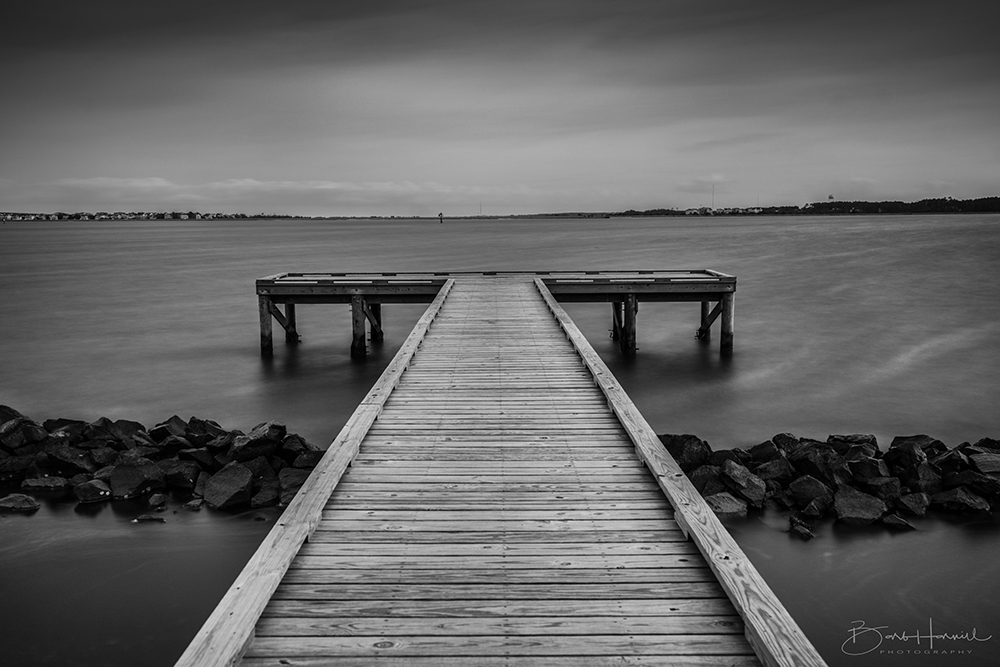
What do you love to photograph the most?   I love to photograph nature, landscape and wildlife.  I love to travel and can combine the two. I am currently fascinated by water photography because of the variety of ways you can photograph it.  I recently started playing around with ND filters and long exposure photography.

What is one thing you have learned that has improved your photography?   For me continuing to take lessons that involve hands on practice where I get feedback has done the most to improve my photography. (It’s doesn’t hurt that I get to go to great locations like Kevin’s Rocky Mountain Photography Workshops).  I believe that nothing is better for improving your skills than learning from others in a hands on environment.

Advice you’d give to others wanting to grow in their photography skills:  Other than taking classes and learning from experts – shoot as often as you can and shoot what moves you. For technical skills – You can do this without spending a dime (you already have the equipment). Play around with settings – don’t shoot auto. Take repeat shots of same subject but play around with settings to see the impact of those changes – without worrying about the subject.

For subjects –photograph what you love – I believe that having an emotional response to the subject translates thru your lens. You know when you get that great photograph, and when the right technical settings combine with the right subject… magic happens!

Share

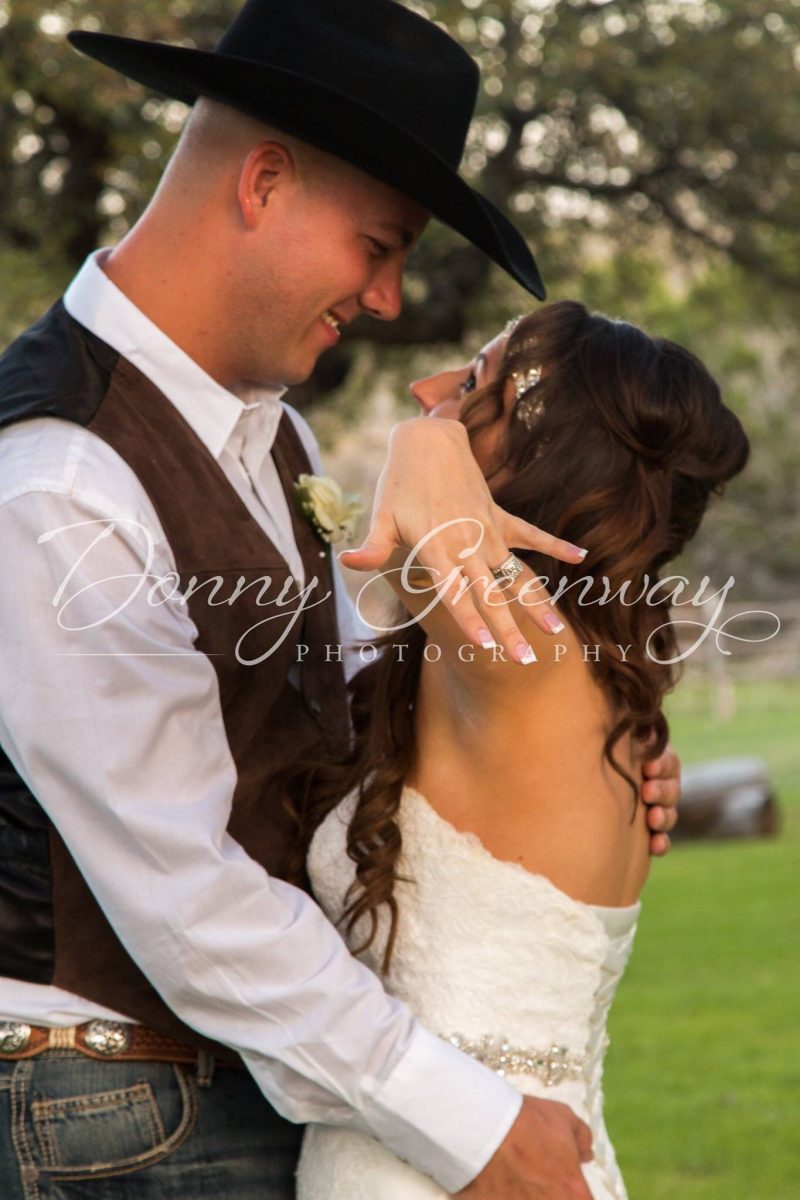
Featured Photographer: Donny Greenway

Your Name: Donny Greenway

Type of Camera:  Canon EOS 6D and 70D

What do you love to photograph the most?   Wildlife, kids, and dogs. Sometimes small weddings.

What is one thing you have learned that has improved your photography?   It’s all about light. Oh yeah and practice, practice, practice!

Advice you’d give to others wanting to grow in their photography skills: Take as many classes as you can. Don’t be afraid to be critiqued by your peers. When I started I made myself take and edit (in Lightroom) 300 pictures a week for one month. Lastly don’t be afraid to ask for help.

Share

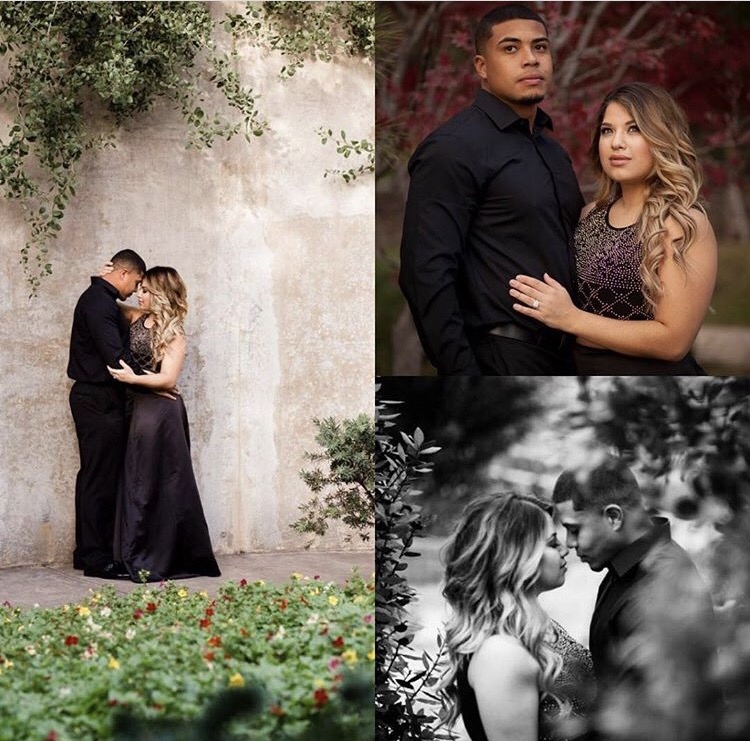
Featured Photographer: Mary Kathryn

Your Name: Mary Kathryn

Type of Camera:  Canon 5D Mark II

What do you love to photograph the most?   I love to work with animals, couples in love and children. I have an eye for raw moments and details.

What is one thing you have learned that has improved your photography?   I’ve learned to always anticipate a moment and to allow clients to feel comfortable around me to bring out those natural smiles and moments.

Advice you’d give to others wanting to grow in their photography skills: Don’t play the comparison game and stay true to what you enjoy shooting.

Share

Share Your Art

Some of you may have heard of Eva Cassidy. If you haven’t heard of her, I think you need to know about her.

Eva was an American vocalist/guitarist gifted with an incredible musical talent. Sadly, she died of melanoma in 1996 at the age of 33.

Terribly shy, Eva never achieved great fame during her life, but after her death, her music lived on and reached the top of the charts in UK and was a best seller on Amazon for a while. Once you hear her music, you’ll understand.

The New York Times described her as a “silken soprano voice with a wide and seemingly effortless range, unerring pitch and a gift for phrasing that at times was heart-stoppingly eloquent.”

In learning more about her, I find her so inspiring. Her pursuit was simply to do the best at her art, which was her music. She was not seeking fame or fortune really. She simply made the world a more beautiful place.

I encourage you to listen to her rendition of “Over the Rainbow” (below). It’s like her spirit somehow reaches into us and lifts us to where we are almost touching heaven.

It is such a tragedy to see such a life cut short by cancer. But I am just struck by how much she is living on through her gift of music that she gave us.

We as artists, need to really appreciate that a part of us lives on through our art. I am so grateful for the artists who have impacted my life. Simply by experiencing the music of Eva Cassidy, my life is somehow “better”. I appreciate “life” a little more. I am reminded to be grateful for this brief time I have on earth.

Your art might have that effect on someone.

Share your art.

Sincerely,
Kevin Gourley
Fields of Gold

The Eva Cassidy Story

Share

Featured Photographer: Don Simpson

Your Name: Don Simpson

Type of Camera:  Canon 1d Mark IV, Canon 6d and my newest camera is the Lumix GH5

What do you love to photograph the most?   I find myself drawn most to wildlife and nature.  But more recently I have been spending the majority of my time learning and telling stories via the use of “Hybrid Photography”.  This allows me to engage more of the viewer’s senses as I create a short video stream composed using still images, video clips, music, voice over, native video clip sounds, graphics and text.  Furthermore, through the use of “Live Portraits” I can tie an entire video story to a single photo hanging on a wall or even printed on my business card.  This permits a viewer to first see and feel one of your favorite photos and then, through the use of their iPhone or Android, see it come to life right before their eyes or even displayed on their TV or computer.

What is one thing you have learned that has improved your photography?   Early in my photography adventure it was learning how to use my camera.  Then I progressed to learn everything I could about color and light (both natural and man made).   From there I advanced into composition, perspective and point of view.  Still I wanted to evoke even stronger emotions through my story telling so I learned about “Gesture”.  Not gesture in the traditional sense as most people identify it.  Gesture can be found in everything not just a person doing something.  I found gesture in nature, wildlife, people, architecture and even still life.  I listened as people looked at photographs and paintings to see what grabbed them or conversely what made them move on and not stay in front of a particular piece of art.  All of these things have lead me to “Hybrid Photography”.  I can now use even more of my viewer’s senses and tell an even broader and deeper story.  At the end of the day why do photography at all?  Isn’t it about making a memory, telling a story, evoking an emotion or reaction, recording an event?  So I endeavor to use everything I can to help the viewer through their own journeys.  Over the last year I have even found myself in classes in sculpture, drawing and painting.  Each of these “cousins of photography” have allowed me to become more intimate with the detail in front of me.  I believe over time my photography will take yet another step.

Advice you’d give to others wanting to grow in their photography skills:  Get the technical stuff out of the way quickly.  Join others in your craft and participate in field trips and adventure workshops.  Visit museums and galleries paying attention to what does and does not move you.  Chances are it will move others as well.  Create your own style and immerse yourself in those things that bring you the most pleasure.

Share

Take the Time to Just STOP Occasionally

If you are out hiking on a trail, take the time to STOP and look around you. Hiking on a trail for exercise is different from hiking on a trail to photograph nature. Pause. Look around. Look up. Look down. Look behind you also.

You might totally miss something beautiful if you just keep pushing forward without stopping to LOOK. Especially on rocky rugged trails, it is easy to focus on where you are placing your foot in each step so you won’t fall. That means you really are not seeing the world around you.

That is one of the things I have loved about photography. It reminds me to slow down and appreciate the world around me.

There’s probably a good analogy here about life in general. We can sometimes expend all our energy focusing on just putting one foot in front of the other and totally miss the beauty in our lives.

Seriously, take the time to just STOP occasionally.

Happy Picture-Taking… and STOPPING,

Kevin Gourley

Share

Have Fun and Explore Various Techniques

I encourage you experiment with various techniques in creating your digital art.  This includes exploring some of the various different software tools available to you. It is totally okay to experiment. Try new things. Go beyond just “photography” and see what you can create.

In this image, I used a mix of Adobe Photoshop, along with software from Topaz Labs (I used Topaz Glow and Topaz Impression) to create something completely abstract.  Granted, since it is “art”, you may or may not like it. Each person’s artistic expression varies greatly, as does each person’s appreciation of art.  I was just playing around, in creating this.

In creating this, I started out with the image below. She’s totally lovely in just a regular photograph.  I just felt like experimenting to see how much I could transform this image into something totally abstract.

Or in this image, I started with an image originally shot at a very slow shutter speed, intentionally adding motion blur, and then applied some color enhancements with Adobe Photoshop, followed by a few tweaks with Topaz Glow.

Or in the following image, I did NOT use any software manipulations to create this. This was 100% created with camera techniques using a super slow shutters speed and “painting light” into the background.

Experiment. Have fun. The bottom line is: If you are not having fun, you are not doing it right.

Happy Digital Imaging!

Kevin Gourley

Share

Featured Photographer: Bob Varnell

Your Name: Bob Varnell

Type of Camera:  Pentax K-5 II

What do you love to photograph the most?   I’ve always loved exploring the world’s natural beauty so it follows that I enjoy photographing landscapes and wildlife.  The most fascinating aspect of nature photography for me is trying to capture the ideal lighting on any given subject, and I enjoy the fact that sometimes it’s extremely fleeting!   There’s nothing more beautiful than watching a mountain, sky, flowers, and trees illuminate with the first rays of light or catching the glow of the clouds as the sun is setting.  I also enjoy trying to photograph wildlife at the perfect moment: a whale breeching or an eagle grabbing a salmon or a hummingbird drinking the nectar from a flower.

What is one thing you have learned that has improved your photography?   Kevin and others have emphasized the importance of not being too focused on your main point of interest and what’s directly in front of you, but turn around and look at all of your surroundings.  We were in the Rocky Mountain National Park photographing Bear Lake during sunrise and someone said “look behind you”, and there over our shoulder was the moon setting over the mountain with the Aspen reflecting the sun in the foreground.  It doesn’t get much better than that!

Advice you’d give to others wanting to grow in their photography skills:  Have fun!  Unlike many of our daytime jobs it’s OK to mess up again and again and again.  Keep trying and when you finally get it right it’s that much more enjoyable.  Workshops are great.  Kevin’s workshops are top notch and highly recommended but also branch out and try other workshops.  Even if they’re not quite as good you usually pick up a couple of pearls along the way. With many aspects of photography there’s not a right or wrong way to do things, but you just need to find the way that works best for you and develop your own style.  I’m working to achieve my own photographic style and I hope we cross paths in our pursuit and we can share what we are learning!

Share

Kevin Gourley Photography Workshops, Austin, TX – Austin Photography Classes